Latest Reviews

Mostrando entradas con la etiqueta 1960-1990. Mostrar todas las entradas

jueves, 18 de octubre de 2012

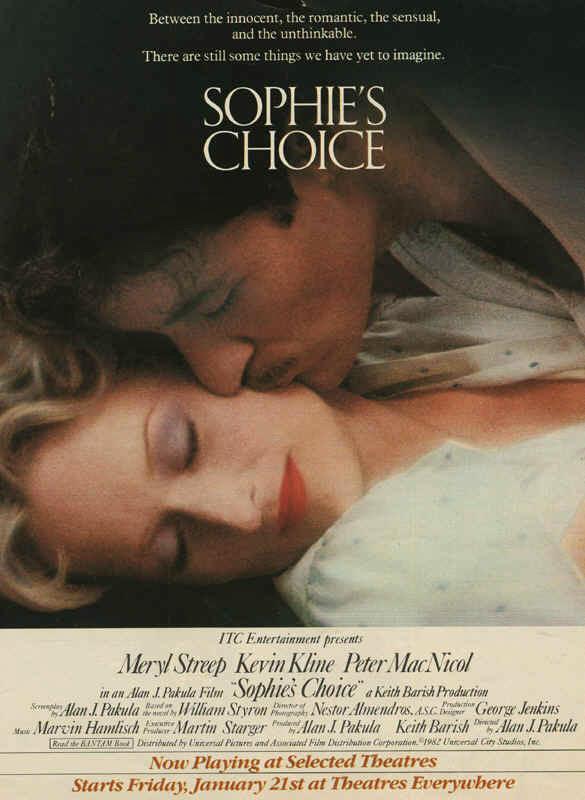
'Sophie's Choice' (Alan J. Pakula, 1982)


Title: 'Sophie's Choice'

Release Year: 1982

Director: Alan J. Pakula

Cast: Meryl Streep, Kevin Kline, Peter MacNicol.

Plot: The aspiring writer Stingo arrives at a family guesthouse to write his first novel but he's disturbed by the presence of a young couple conformed by Nathan Landau, a troubled unstable man and Sophie Zawistowski, a polish woman who can't scape her past.

Review: After she was overacted in 'The Hours' (one of my favourite movies) and somehow spoiled its quiet pace, I've had never trusted Streep's skills anymore. After 'The Iron Lady' I regained some of the trust but it's with 'Sophie's Choice' that I have seen what Meryl Sreep is capable of.

Mostly led by her, Pakula's film focuses on the three friends. One is the observer who falls in love with Sophie. The other is Sohpie's mentally ill boyfriend, who lies about his job and his faculties everyday. The final one is a complex, tortured woman who lives terrifyed for the decision that she had to make years before.

Meryl Streep gives a mesmerizing performance as Sophie Zawistowski

Streep's performance is out of this world; from the concentration camp when she's skinny and bald, to the days she suffers from high fevers and anemia and the present day. Imitating the accent of a real Polish to perfection, Streep transforms Sophie into a vehicle to show everything she has to give. And the level she achieves is so remarkable that it leads the movie by herself.


Tortured by her past, Streep's character can't forget the decision she had to make in order to save one of the children; condemning the other

Together with the complicated trio that she has with her psychotic boyfriend and the sweet yet nervous Stingo, she tries to live a normal life, but she can't forget the day that, in the camp, she had to decide (to choose) which of his children was going to live and which one was going to be cremated (the first day they arrive). The fact that then the other is also killed while staying in the camp may take away some importance to this decision for the spectator, but as a mother she had to be responsible for ending with the life of one of her kids. How she escapes is left unsaid (she had a deal to save his son that fails but nothing is said of a deal for her), maybe because her soul is still kept in there, never forgetting the final screams of her daughter.

Sophie's choice. Meryl Streep shot the scene only once and didn't want to do it again. Already a mother at that time, she later said that the scene had been exhausting and psychologically demanding to make

miércoles, 17 de octubre de 2012

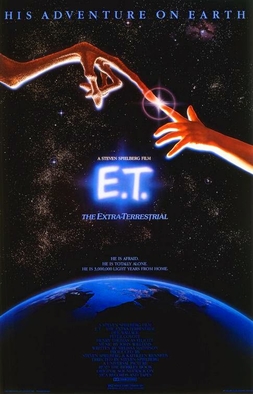
'E.T. the Extra-Terrestrial' (Steven Spielberg, 1982)


Title: 'E.T. the Extra-Terrestrial'

Release Year: 1982

Director: Steven Spielberg

Cast: Dee Wallace, Peter Coyote, Henry Thomas, Drew Barrymore, Robert MacNaughton.

Plot: After being abandoned in Planet Earth, a little outer space creature, 10-year-old Elliott finds him and together with his brothers tries to find a way to find it a way to return before police and scientists can find them.

Review: Another Spielberg movie, this time it's an unquestionable success. There's nothing about the endearing extra-terrestrial story that I would like to change. Add to this that the film is a remarkable technological achievement and that it is based on the imaginary friend that Spielberg created after his parents' divorce and it's difficult not to praise him

The friendly E.T. quickly establishes a beautiful relationship with the children of the family, especially connecting with Elliott, who considers him a friend instead of just a weird creature and wants to protect him from the greedy hands of scientists or press. As many times, only children understand the real meaning of a friendship, far beyond the economic and scientific interests that the particular situation may involve.

The iconic image of Elliott and E.T. flying with a bycicle

But drama reaches the story when the extra-terrestrial gets sick, and nearly dies. It's quite tough to see Elliott shouting at the doctors and claiming that they are killing E.T. So when it eventually recovers and they escape to the forest, you wish nothing but their mission will triumph.

In the end, E.T. says goodbye to his human friends, while in tears the children let their curious companion go. At this point I was already crying; the story is so beautifully made... It's evident that Spielberg made it carefully as it was also part of his childhood, a world that adults don't understand, as they don't understand the friendship between an outer-space creature and a 10-year-old human being (usually understood as a tale of tolerance and mutual understanding in which even the most different creatures can help each other).

"E.T. Phone Home" The remembered sentence met with the extra-terrestial's farewell for an emotional and moving ending

martes, 16 de octubre de 2012

'Raiders of the Lost Ark' (Steven Spielberg, 1981)


File:Raiders.jpgTitle: 'Raiders of the Lost Ark'

Release Year: 1981

Director: Steven Spielberg

Cast: Harrison Ford, Karen Allen, Paul Freeman, Ronal Lacey, John Rhys-Davies, Denholm Elliott.

Plot: Archeologist Indiana Jones is entrusted with a dangerous mission: finding the Lost Ark that contains the fragments of the Ten Commandments before the Nazis do it, as it's thought that they grant an enormous power those who possesses them.

Review: As it was the first installment of a very successful franschise and had Spielberg directing it, I was waiting for an entertaining action movie with a complex, well-structured story. No, no and no.

'Raiders of the Lost Ark' (which I chose over 'Blade Runner' in what it was a clear bad decision) is a weak blockbuster that lacks the strength of other franchises. It's usually not as funny as it should and contains many plot forgetable topics. First of all, it is a film really based on the idea that Nazis would risk their lives to find the Ten Commandments believing that they would achieve an incredible power? Really? It has little credibility. Moreover, although Ford's Indiana is well acted and has enough human weaknesses (like his fear of snakes) to connect with the audience, his love story with Marion is quite predictable, not offering much new challenges (which doesn't exactly mean that I dislike it).


A Harrison Ford at the top of his career was chosen to star as Indianda Jones in Spielberg's film. It was critically and economically successful, although for me it has been a major disappointment

This way, the first Indiana Jones' film unfolds as a quite dull and unrealistic adventure with a limited success as it sometimes even fails to entertain younger audiences.

lunes, 15 de octubre de 2012

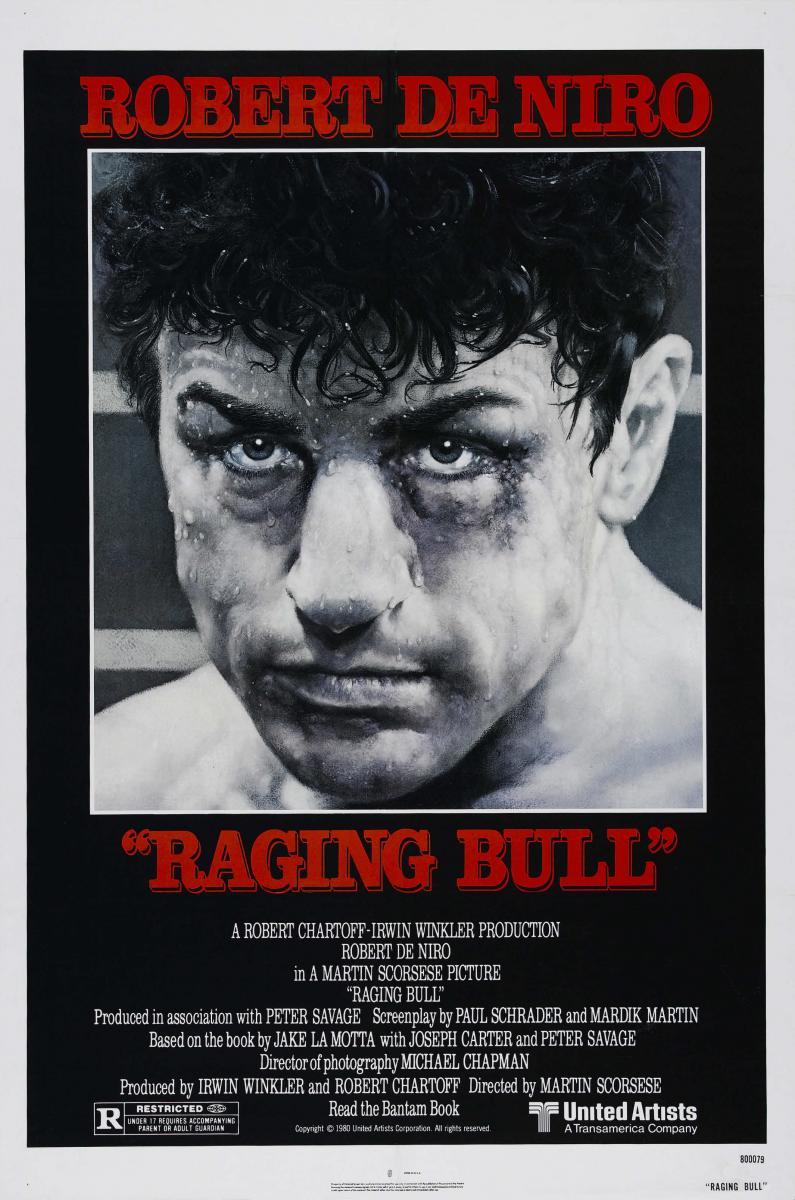
'Raging Bull' (Martin Scorsese, 1980)


Title: 'Raging Bull'

Release Year: 1980

Director: Martin Scorsese

Cast: Robert De Niro, Cathy Moriarty, Joe Pesci.

Plot: The film tells the rise and fall of Jake la Motta, a successful boxer whose insecurities endanger both his personal and professional life.

Review: Martin Scorsese is one of my favourite directors and usually I adore his movies. 'Raging Bull' has been the underwhelming exception to the general rule.

That doesn't mean it was a bad movie. Generally it is listed as one of the best films of all time and Robert De Niro's performance is nothing but spectacular.

The problems is that the typical atmosphere of violence in which Scorsese usually floods his characters (that almost always delivers wonderful  and raw results) seems strangely out of place. I can understand that la Motta was a very complex person; he was strong and powerful in the ring, but once he was outside, his insecurities made him a weak man. But somehow, you always expect some kind of redemption, an evolution that justifies the whole run that the character has made. On the contrary, as time goes by, De Niro's character only becomes worse, maybe influenced by the also questionable conduct of his brother.


Jake la Motta: a story of violence and insecurities sunk by its own weight

All this contributes to a certain detachment of the audience with the film and ultimately leads to an incomplete cinematographic experience. In the end, when an overweight la Motta recites one of Marlon Brando's most memorable speeches in 'On the Waterfront', you feel that they've left something behind, that something is missing; la Motta starts as a fragile-minded persona and this characteristic drives his entire life until his disppointing ending, with no evolution in the meantime. When he finally decides to take the stage one more time, you ask yourself if the journey had any sense to begin with, other than showing the extreme transformation De Niro had to go through to embody his troubled character.

domingo, 14 de octubre de 2012

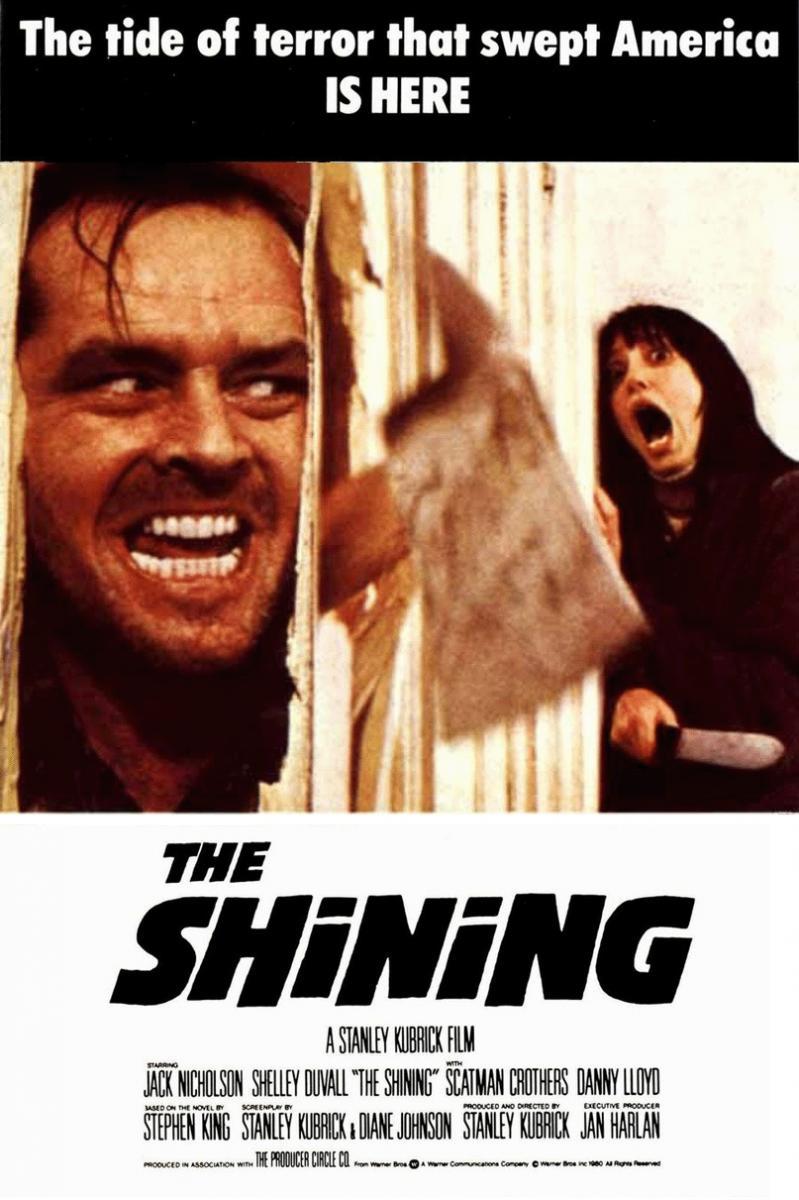
'The Shining' (Stanley Kubrick, 1980)


Title: 'The Shining' 

Release Year: 1980

Director: Stanley Kubrick

Cast: Jack Nicholson, Shelley Duvall, Danny Lloyd, Scatman Crothers.

Plot: Jack Torrance moves in the Overlook hotel with his family to take care of it while it remains closed in the winter season. But although his initial intention is finding peace to write his novel, as different paranormal events occur, he starts to lose his mind and eventually tries to kill his wife and son.

Review: 'The Shining' didn't have easy beginnings. When it was released in 1980, it wasn't met with critical acclaim and Stanley Kubrick received a Razzie nomination for Worst Director. Through the years it gained a cult following as the film was reassessed as a horror classic.

I truly can understand why it didn't meet expectations when it was released; it was long, complex and some of the supernatural events did not have an explanation and people didn't understand the film well. I did also struggle with the difficult plot twists and time impossibilities and ended asking myself: does the story even have sense? And it's at that moment when I think that the film suceeds; while making the audience suffer to understand the hows and the why the film catches it, in the same way that the Overlook hotel trapped a Jack Torrance that 'had always lived there'.

  
Hello, Danny. Come play with us. Come play with us, Danny; Forever, and ever... and ever. The unforgettable scene featuring 'The Shining twins'

Anyway, even if they had problems with the plot, I don't understand why they couldn't praise Jack Nicholson's performance. It's the best work that I've seen of him and obviously deserved more than a Saturn Award nomination. His wonderfully acted and marvelously portrayed Jack Torrance leads a film that creates a universe where you can lose yourself, in the same way as Jack lost himself in the haunted hotel maze... and never escaped. Was he there from the very beginning? Why was there a photo of him at the principal hallway dated 1921? Are he and Grady the same person? Is the dead woman in the bathroom Grady's dead wife? And the twins... are they his daughters? Why does the elevator open to reveal a blood cascade? Why is Danny able to perceive the hotel's 'Shining' and why does he start whispering 'REDRUM' (Murder written backwards)? Those are enigmas yet to be solved.

'Here's... Johnny!', the line that is now a part of film history

sábado, 13 de octubre de 2012

'Apocalypse Now' (Francis Ford Coppola, 1979)


Title: 'Apocalypse Now' 

Release Year: 1979

Director: Francis Ford Coppola

Cast: Marlon Brando, Robert Duvall, Martin Sheen, Frederic Forrest, Albert Hall, Sam Bottoms, Lawrence Fishburne, Dennis Hopper.

Plot: Captain Willard has been given the mission of entering Vietnam wild jungles to find General Kurtz, who after an exemplary career has become insane and lives as the head of a tribe that worships him.

Review: After watching its huge length and the time it took to be shot I truly expected a soporific war-themed movie in which Francis Ford Coppola had wasted too much money. Nothing could further from reality: 'Apocalypse Now' is a great masterpiece and the biggest surprise as an unexpected revelation of this research project.

A rave story about the disastrous consequences of war, this is cinema at its most visionary and audacious level, a hallucinatory tale of self-destruction and a result of the psychological scarfs that the Vietnam war left in soldiers.


The technical perfection of the film accentuates the sensation of delirium and madness

This way we advance through a visually dazzling story and a country where fire and water are fused and each of them seems more lethal than the previous one. In a world region were madness has seized power and there's little sanity left, Sheen's character tries to find the lost General, while trying to understand the reason why he lost his way.

That last task is very difficult to accomplish, since when he locates him (in the heart of the jungle in an indigenous camp), all that is left is an insane despotic creature, who lives adored as a god and surrounded by a delirious infinity of massacred bodies and severed heads distributed all over the village. Kurtz has definitely lost his mind after so many years of irrational hate and murders and as he awaits for Willard to kill him he concludes this massive work of art with his final meaningful words: 'The Horror... The horror...'


A mentally insane Marlon Brando appears only in the last part of the film, but transformates it into a must-seen masterpiece about the rave consequences that war has in men

viernes, 12 de octubre de 2012

'Grease' (Randal Kleiser, 1978)


Title: 'Grease'

Release Year: 1978

Director: Randal Kleiser

Cast: John Travolta, Olivia Newon-John, Stockard Channing, Jeff Conaway.

Plot: After a marvelous and romantic summer together, Sandy Olsson and Danny Zucko separate because she's going back to Australia. When she eventually does not return (due to her parents' decision), her path and Zucko's one cross one more time.

Review: 'Grease' is one of the most famous musicals ever made and its songs are widely known nowadays. Using the Rock 'n' Roll fever of the 50s Travolta and Newton-John delivered an entertaining and curious love story, still remembered nowadays.


Different versions of the same love story


Famous 'Greased Lightning'

After so much drama, it was a delight having the chance to see a comedy, better; a musical. The music numbers (contrary to what happened with 'Cabaret') are appealing, funny and have rythm and the leading characters are enourmously talented, outstanding Travolta for his Danny Zucko, a childish senior (with very childish friends) that feels for Sandy more than what his status allows him to show. The rest of the film constitutes a coming-of-age story with many of them facing the typical (and not so typical) problems of their age, like the doubts over and unknown professional future or the possibitily of being pregnant without having even ended highschool.

All this happens around Snady and Danny's love story, which changes from musical number to musical number (as well as the other plots), eventually leading to her transformation from innocent lambs to ultimate femme fatale to get the man that she wants (although he finally desires to be with her no matter what).


'You're the one that I want': Travolta and Newton-John's final song together

jueves, 11 de octubre de 2012

'Close Encounters of the Third Kind' (Steven Spielberg, 1977)


Title: 'Close Encounters of the Third Kind'

Release Year: 1977

Director: Steven Spielberg

Cast: Richard Dreyfuss, François Truffaut, Melinda Dillon, Teri Garr.

Plot: Roy Neary and Jillian Guiler witness the appearance of UFOs in the sky and after finding support in each other, they start to look for an answer to the event that has changed their lifes.

Review: Second Spielberg film of the project, once again the acclaimed director plays with hiding what the audience wants to see until the very end.

This time, the mystery focuses on UFOs and extraterrestrial life (a trend originated by the enormous success of 'Star Wars') and how it affects the lives of the ones who have witnessed their landing on Earth. In the case of Roy it makes him so obsessed that he's isolated from his family. Jillian Guiler's  case involves her son, who was the one attracted to the UFO. Both of them are misunderstood and find support in each other, being called by the extraterrestrials and understanding that a fake gas leak in the exact place with which they have been dreaming is a government attempt to contact with outer space life.


Roy and Jillian, after the outer space call changed their lives

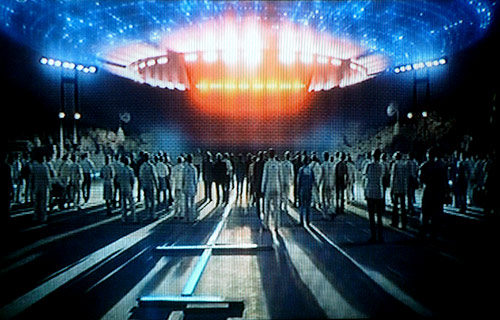
The Final scenes are visually dazzling and beautifully filmed. As the mothership arrives, the abducted human beings that were inside of it return home and a new crew enters the spacecraft, as aliens are presented as friends and not as enemies (as was done in the 50s) and human race has reached a moment in which they're ready to comunicate with them in a peaceful way, using music to exchange the necessary information with them.


Extra-terrestrials presenting themselves as friendly creatures was an innovative idea those days. Here, the outer space creature salutes human race (which is ready to establish contact with them) and smiles

As Roy puts on the space suit and heads to the mother ship, we can't help but feel intrigued by what is kept inside. That was answered in an extended version of the movie that shows the inner side of the spacecraft, but I've preferred not knowing what he found, as sometimes the magic created by Spielberg must be left unknown, with the last image of Roy approaching the ship and Jillian's son saying goodbye. The hero makes contact. A close encounter of the third kind.

Close encounters of the third kind. Human race and extra-terrestrials contact

miércoles, 10 de octubre de 2012

'Annie Hall' (Woody Allen, 1977)


Title: 'Annie Hall'

Release Year: 1977

Director: Woody Allen

Cast: Woody Allen, Diane Keaton, Tony Roberts, Carol Kane, Paul Simon.

Plot: Alvy Singer, a neurotic sometimes obsessive 40-year-old comedian, reminisces her relationship with his beloved Annie Hall after his different manias contribute to the rupture of the couple.

Review: I loved Diane Keaton in her supporting role in the 'Godtfather' so when I had to choose a Woody Allen comedy I had no doubts that critically acclaimed 'Annie Hall' would be the one. The film ultimately doesn't quite reach the high expectations I had, but the innovative story-telling methods of Allen and the chemistry between the two leads make of it an enjoyable cinematographic experience.

If there's something that describes Woody Allen that's the stuttering and complex trail of his strange thoughts. That said, Diane Keaton becomes in this movie the perfect companion for him, with her alternative risky looks and her sweet voice to configurate a sweetly insecure persona. But not only the two lead make of 'Annie Hall' an odd yet intelligent film. The main reason why it succeeded in 1977 (winning the Best Picture Academy Award over the big hit 'Star Wars') was its groundbreaking way of telling its story.


Deep down, the perfect couple; and they knew it. Why spoiling it?

Woody Allen used a unique form of expressing himself in an intelligent script capable of speaking of sexual themes and relationships stuff without being vulgar (something quite difficult nowadays). From staggered periods of time, to external observations of a past scene with the members that were in it, going through smart speeches narrated directly to the screen, talking straight to the audience; 'Annie Hall' used every skill and the book and originated some groundbreaking ones to tell an odd yet clever love story about two weird creatures and the way their mutual encounter in their lives has affected each other.


Speaking directly to the camera: Woody Allen made a film aware of the audience's presence

martes, 9 de octubre de 2012

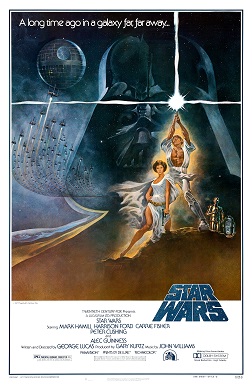
'Star Wars Episode IV: A New Hope' (George Lucas, 1977)


Title: 'Star Wars IV: A New Hope'

Release Year: 1977

Director: George Lucas

Cast: Mark Hamill, Harrison Ford, Carrie Fisher, Peter Cushing, Alec Guinness.

Plot: When princess Leia is kidnapped by the Empire (led by its emperor and Darth Vader), Luke Skywalker, Han Solo, Chewbacca, R2D2 and C3PO initiate a journey to rescue her and reinstaurate peace in their galaxy.

Review: 'Star Wars' is doubtless one of the cinema history most beloved and successful sagas. Back in the 70s it was the ultimate boost for the beginning of Blockbuster trend and since then it has achieved a worldwide cult following and a massive legion of fans.

Personally I think that a movie must also be reviewed taking into account the consequences and impact that it had. Considering that, Star Wars is one of the most groundbreaking films of its time, with innovative special effects and an overwhelming box-office performance. Moreover, its characters have become household names, and continued to gain popularity with the following sequels and the 21st century prequels.


Noble Luke Skywalker, tough -yet sometimes rude- Han Solo and demanding Leia (I see an interesting love story right there), the well-known leading trio of 'Star Wars'

But once you leave the iconic leading trio or the endearing robots R2-D2 and C-3PO, the truth is that 'Star Wars' story is not much more than good entertainment (at least in the first film). It has its epic elements, the construction of what in following installments would be blossoming new plots and a wonderfully special-effects-packed action production, but although it generates a limited desire to continue watching the saga, generally it lacks the depth of other blockbuster franchises.


One of the most endearing relationships is between the robots R2-D2 and C-3PO

lunes, 8 de octubre de 2012

Taxi Driver (Martin Scorsese, 1976)


Title: 'Taxi Driver'

Release Year: 1976

Director: Martin Scorsese

Cast: Robert De Niro, Jodie Foster, Albert Brooks, Harvey Keitel, Leonard Harris, Peter Boyle, Cybill Shepherd.

Plot: To overcome his chronic insomnia, Travis Bickle works as a taxi driver at nights. Obsessed with a woman named Betsy and with ending with the filthy society that sorrounds him, he decides to take action as his relationship with a teenage hooker (Iris) blossoms.

Review: Starring Robert De Niro in his best performance, 'Taxi Driver' is one of my Martin Scorsese favorite films (although I generally love everything he does), being a clear example of what film industry owes him and the 'New Hollwood' movement.

The main reason is clear; its characters. To begin with, Travis is a troubled man (I love complex, troubled roles) who lives surrounded by his obsessions. He initiates and spoils his relationship with Betsy (who constitutes his major priority at the beginning of the movie) and later starts to prepare himself to 'take part' in the elimination of the dirt that surrounds the city.

Famous 'You talkin' to me?' scene. As the film goes by, Travis loses his mind completely...

He starts the film as a quite normal yet asocial guy, but ends up entering a spiral of violence and madness in which he lies to everyone about what and who he is. The only capable of helping him is Iris.


Jodie Foster delivers an outstanding performance although having limited screentime

In her first important role, a young Jodie Foster gave life to a very interesting character; the teenage hooker Iris. With only three major scenes in the whole movie, she earned an Academy Award nomination and critics' praise, with the only character capable of conducting Travis rage towards a positive goal (pulling her out of the prostitution market). It's her relationship with him that leads to one of the final, most bloody scenes, executed to perfection by De Niro and leaving a perennial image in moviegoers' minds, as the culmination of a masterpiece.

After killing everybody connecting Iris to the prostitution world and almost being killed, when police arrives, Travis points at his head and exhales 'puff' in an iconic nearly-ending scene

domingo, 7 de octubre de 2012

'One Flew Over the Cuckoo's Nest' (Miloš Forman, 1975)


Title: 'One Flew Over the Cuckoo's Nest'

Release Year: 1975

Director: Miloš Forman

Cast: Jack Nicholson, Louise Fletcher, William Redfield, Brad Dourif, Danny DeVito, Sydney Lassick, Christopher Lloyd, Will Sampson.

Plot: Trying to avoid prison's hard work, Randle McMurphy enters a mental institution, where he defies the tyranny imposed by nurse Mildred Ratched.

Review: Jack Nicholson is (behind Marlon Brando) one of my favourite actors, due to his versatility and usually mad characters. In 'One Flew Over the Cuckoo's Nest' he delivers one of his most acclaimed performances in a movie that re-evaluated the treatment that mentally ill people received almost 40 years ago.

The film is led by him and a band of characters, each of them stranger than the previous one, outstanding the work of Brad Dourif as Billy Bibbit, a suicidal patient terrified by both Ratched and his mother.


Billy lives terrified by both his mother and nurse Ratched

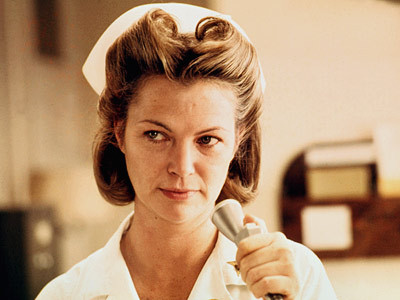
And there is where the nurse plays her role; subtly (in her group sessions) she humilliates her patients in order to control and dominate them, making them feel that they possess lesser minds or that they're unable and invalid to have a normal lifestyle by silently annulating them as human beings.


Subtly humilliating her patients in her meetings with them, Ratched imposes a tyranny in the institution. The anti-authoritarian McMurphy quickly becomes her biggest enemy and although she orders his lobotomization, after he tries to strangle her, she loses the powerful and strict tone, losing also part of her authority

As the film goes by, McMurphy encourages his boys to trust in themselves and to seek for a freedom that they've neven seen as possible, especially helping Bibbit and pretended deaf and mute 'Chief' Bromdem with whom he forges an endearing friendship. At the end, Rached uses her power one more time, causing Bibbit to commit suicide and ordering a lobotomy for McMurphy. When 'Chief' discovers this (just when Nicholson's character had given him enough confidence in himself to feel 'as big as a mountain') he strangles her with a pillow in an emotive scene, uncapable to leave him there suffering. Right after that he successfully escapes towards his freedom by breaking a window, finally being the one who 'flew over the cuckoo's nest'.


A strong connetion is made between Nicholson and Sampson's characters. The first one helps the second to feel capable to be free. The second one liberates his mate when he no longer can relase himself

sábado, 6 de octubre de 2012

'Jaws' (Steven Spielberg, 1975)


Title: 'Jaws'

Release Year: 1975

Director: Steven Spielberg

Cast: Roy Scheider, Robert Shaw, Richard Dreyfuss, Lorraine Gary, Murray Hamilton.

Plot: After the continuous attacks of a lethal shark awake terror in a little coastal town, police chief Martin Brody decides to hunt the creature down.

Review: If you must know something about Spielberg's early movies is that he's a genius in not showing things. In Jaws that's the key of the movie.

That and, of course, the wonderful score created by John Williams (that was played everytime the shark was going to attack, increasing the tension as the audience knew what was going to happen), made of the film (that could really be considered a cheap sunday afternoon TV movie without those characteristics) a major success and a tense cult film.


Although being the most prepared one for the mission, Quint is devoured in the mortiferous jaws of the man-eater shark

Apart from the score and its key role in the origins of Blockbuster movies, Jaws also features an actually built shark. The fact that it's not a digital addition contributes to a major realism, like when Quint is killed, when the jaws of the animal seem to really penetrate in his body for a bloody and realistic scene. The ending, with the famous line 'Smile, you son of a...', it's a glorious finale in which all the tension explodes and you end up breathing fast with a strange feeling of relief.


"Smile, you son of a..."

viernes, 5 de octubre de 2012

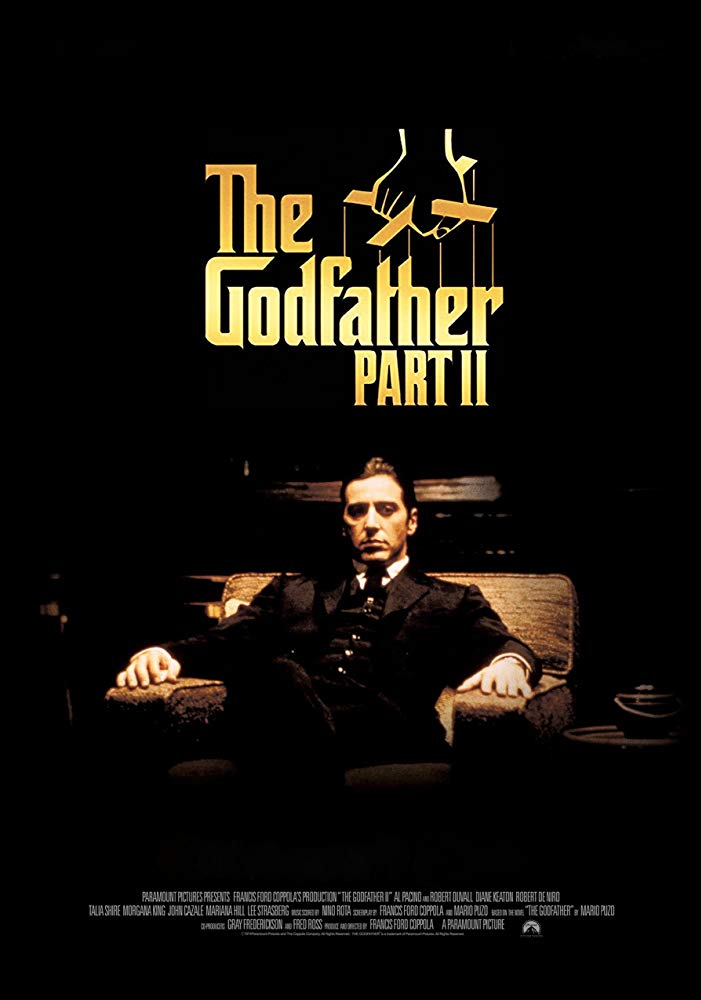
'The Godfather Part II' (Francis Ford Coppola, 1974)


Title: 'The Godfather part II'

Release Year: 1974

Director: Francis Ford Coppola

Cast: Al Pacino, Robert Duvall, Diane Keaton, Robert De Niro, Talia Shire.

Plot: A continuation of the Corleone family story, the film narrates two stories; the origins of Vito Corleone and the establishment of Michael as the head master of a family full of betrayals and secrets.

Review: After receiving critics and audiences praise, 'The Godfather Part II' was the exception to the rule in terms of sequels, which it revalorated.

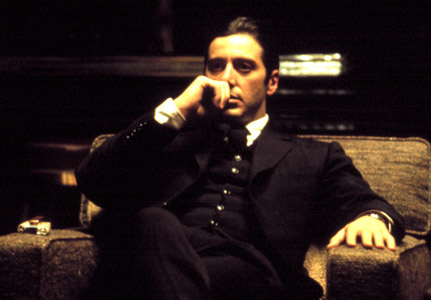
Following the story of Michael Corleone, we find the family years after the end of the first film, with many members poisoning the family relationships and Michael and Kay's marriage hitting a low bottom. On the other side, we see how it all started, with Robert De Niro delivering a powerful performance as the younger Vito Corleone. Both stories are incredibly well intertwined in a writing exercise that most filmmakers aren't able to reach.


Corleone's beginnings in the mafia world, played by Robert De Niro, are the film's major achievement

Together with the outstanding performances from the rest of the cast, 'The Godgather Part II' could be considered in many ways better than the original. Why then the first is usually considered better? Well, to start with, it contains the iconic performance of Marlon Brando, but most importantly it stands as 'Vito Corleone's reign', while the second part is 'Michael Corleone's reign and the origins of the family'. And although Al Pacino delivers a gorgeous performance, both characters can't compare.


The important man, the boss alone on top of the mountain. Vito Corleone was always surrounded by his family, who admired and loved him

Whereas the first one ended the film dying while sweetly playing with his granddaugher and revealing to his son that he didn't want a crime life for him (as family was always his priority), the second one ends up still at the head of the mafia family (and much more alive) but destroys the connection over which it was built, once that we had come to understand its different links and connections thanks to both the first installment and the part of Vito Corleone's youth. If moviegoers must decide between the two personifications of a mafia leader, they are surely going to choose the first one, as well as they usually choose the first film as the best one.

The perfect death for the perfect patriarch. Vito Corleone's sweet devotion towards his family is something that Michael has out of his reach

jueves, 4 de octubre de 2012

'The Exorcist' (William Friedkin, 1973)


Title: 'The Exorcist'

Release Year: 1973

Director: William Friedking

Cast: Ellen Burstyn, Linda Blair, Lee J. Cob, Max von Sydow, Kitty Winn, Jack MacGowran, Jason Miller, Mercedes McCambridge.

Plot: After Regan is possessed by the devil, her mother Chris MacNeil looks for help in medicine and ultimately decides that her daughter needs an exorcism.

Review: The most famous (and most parodied) horror film of cinema history. We take a break between the two 'The Godfather' installments with this genre classic.

It doesn't matter how many years go by or how good and realistic new technologies are, if a films is well-done, no matter how old it is, it can still scare you to death. That's what 'The Exorcist does' through its 2 hours lenght.

One of the different shadows that appears momentaneously in fast and fading shots. A terrifying technique that arises more than one scream

After she goes from being a normal teenager to curse everybody and become an agressive child, Regan's mother's despair increases. I truly don't understand what the doctors were waiting for; it's true that if Regan was going through a mental illness she could be making everything up. But one thing is cursing the whole day and the other is appearing with a massacred face and being able to go down the stairs backwards and walking with both feet and hands. That was scary.

The well-known image of Regan's impressive transformation. How could any doctor think that she was going to teenage phases; we are sort of crazy, but not possessed, mister...

After the necessary journey towards the exorcism, the famous scene arrives. One thinks that after having watched it hundreds of times it should have lost its effect but when the possesed young girl starts to do a 360 degrees rotation with her head it's as spooky as ever. After half an hour of terrifying looks and the killing of both priests, the girl returns to normality, not knowing what has happened, neither knowing that she has changed horror history forever.


Famous score and scenes from 'The Exorcist'

miércoles, 3 de octubre de 2012

'The Godfather' (Francis Ford Coppola, 1972)


Title: 'The Godfather'

Release Year: 1972

Director: Francis Ford Coppola

Cast: Marlon Brando, Al Pacino, James Caan, Richard S. Castellano, Robert Duvall, Sterling Hayden, John Cazale, Diane Keaton.

Plot: One of the most famous crime stories of cinema history, 'The Godfather' narrates the life of the Corleone mafia family (led by Vito Corleone) and the evolution of his younger son Michael from living outside the family business to being its new boss.

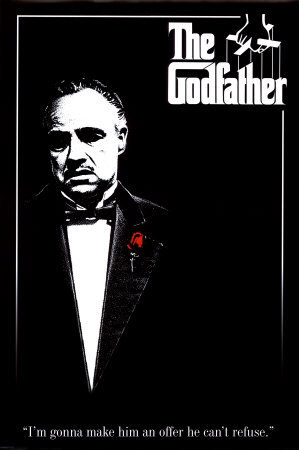
Review: Many consider 'The Godfather' one of the best films in cinema history. They're not wrong. With an astonishing cast led by the memorable performances of Al Pacino and Marlon Brando (especially the last one), you start the movie not understanding any of the family connections and you end entering and understanding them.


"I'm gonna make him an offer he can't refuse": In the role of a lifetime Marlon Brando's Vito Corleone was (and is) one of the most iconic characters in film history. Not only feared but also with strong connection of love and respect towards his family. A completely round persona

The main reasons for its success are its perfect script and the marvellous perfomances/characters. Marlon Brando shines with one of the most remarkable performances of film history. His Vito Corleone is an iconic character that is able to produce fear while trying to maintain the family united with his best intentions, ultimately dying while endearingly playing with his grandson. At the other side of the coin, we find Al Pacino's Michael Corleone, who suffers a deep transformation from outside oberserver to head and master of the family's operations. His realtionship with Keaton's Kay is the only love story in 'The Godfather' and, surprisingly, it really works.

From the light to the darkness: Michael Corleone goes from abhorring his family business to command each and all of them

In other terms, the film benefits from Mario Puzo's blend of violence and genius, while guided by Francis Ford Coppola masterful direction. The deaths, the threats, the undercover menaces... 'The Godfather' creates an entire universe around the family and then fill that space with the most impressive set of actors and iconic roles and lines to deliver a real masterpiece.

Scenes like the horse head one prove that The Godfather is a work of art

martes, 2 de octubre de 2012

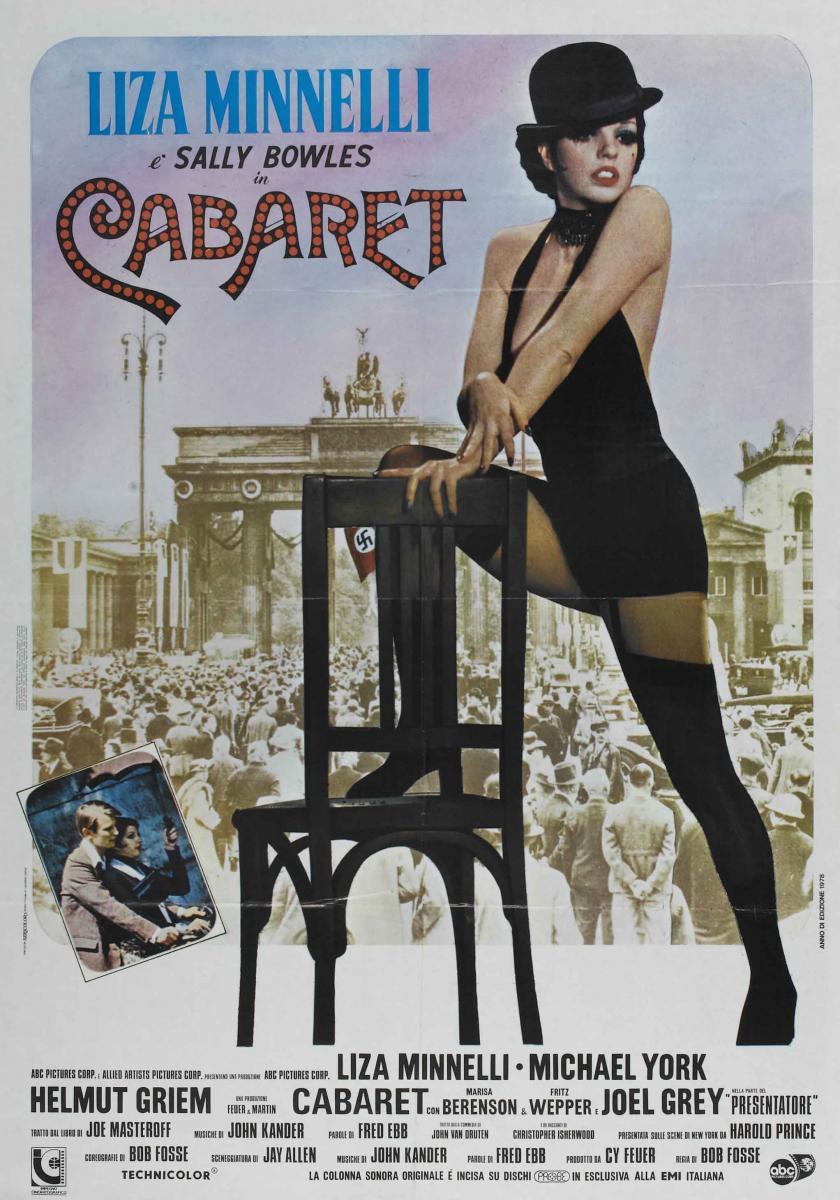
'Cabaret' (Bob Fosse, 1972)


Title: 'Cabaret'

Release Year: 1972

Director: Bob Fosse

Cast: Liza Minelli, Michael York, Joel Grey, Fritz Wepper, Helmut Griem, Marisa Berenson.

Plot: Berlin (Germany), 1930s. As the Nazi party rises, the music and the night fuse in the Kit Kat Club. In the middle of the caos, Sally Bowles and Michael York find themselves in an odd love story.

Review: 'Cabaret' has inspired me mixed feeling. From parts that I've genuinely praised to others that I've abhorred.

The main reason for the abhorred ones is that I think that I never connected with the more vaudevill-themed side of the film. Although I've enjoyed some of the songs ('Maybe this Time', 'Cabaret'), many others haven't had any kind of appeal for me.


"What good is sitting alone in your room? Come hear the music play. Life is a Cabaret, old chum, Come to the Cabaret"

Morover, the frantic life of Sally Bowles was a train moving too fast for me and her love story with Michael never gains enough strength. From their three way situation to the fact that Sally aborts even with the promise of a solid life with Michael because deep down she loves Cabaret life too much, they had an uneven relationship which never had a very promising future (to the date I still strongly believe that Michael was gay or at least bisexual).

Sally Bowles; difficult to love, impossible to hate

The other sider of the coin was represented by the Nazi subplot. I absolutely loved the love story between Fritz and Natalia, with his religion confession (knocking at her door and claiming 'I'm a Jew') as one of the most endearing and fragile moments of the film. Just beautiful. Add to this how that story was connected with a scary (yet implied) awareness of the country's situation (Jews being murdered or insulted, a party with Nazi supporters singing 'Tomorrow belongs to me' in choir, etc.) and the film is saved from failing, ending with a subtle yet terrifying picture of The Kit Kat club, which has now a mostly Nazi audience (when at the beginning of the film they were kicked out).

The film's major success is its subtle Nazi awareness and Fritz and Natalia's love complicated story

'A Clockwork Orange' (Stanley Kubrick, 1971)


Title: 'A Clockwork Orange'

Release Year: 1971

Director: Stanley Kubrick

Cast: Malcolm McDowell, Patrick Magee, Adrienne Corri, Miriam Karlin, Godfrey Quigley, Anthony Sharp, Warren Clarke.

Plot: In a modernist future, Alex is the head of a gang which worships ultraviolence, that and his love for Beethoven conform his entire life. When he's jailed for the murder of a woman, he'll do anything to leave the prison, taking a dangerous decision.

Review: In a strange futuristic world with colorful wigs, strange locations and a different society, Alex uses ultraviolence as a day to day way of expressing himself (as shown in the raping scene where he sings 'Singin' in the Rain' while he undresses the writer's woman).

The first of the two Kubrick movies that I'm going to review, 'A Clockwork Orange' reaches the other side in terms of transgression and controversity. Considered a cult film by many, Alex's actions and his behaviour have given praise to its creator Stanley Kubrick.

The creation of Alex's character was very praised by audiences and critics

Although I didn't specially worship the character, I did appreciate how intelligent he is and how, in his mind, there's only one way to tell a story as complex as his. Not only does the film hand the microphone to the criminal this time, but also helps us to understand his mind and why he ultimately decides to offer himself as a test subject for the Ludovicho technique.


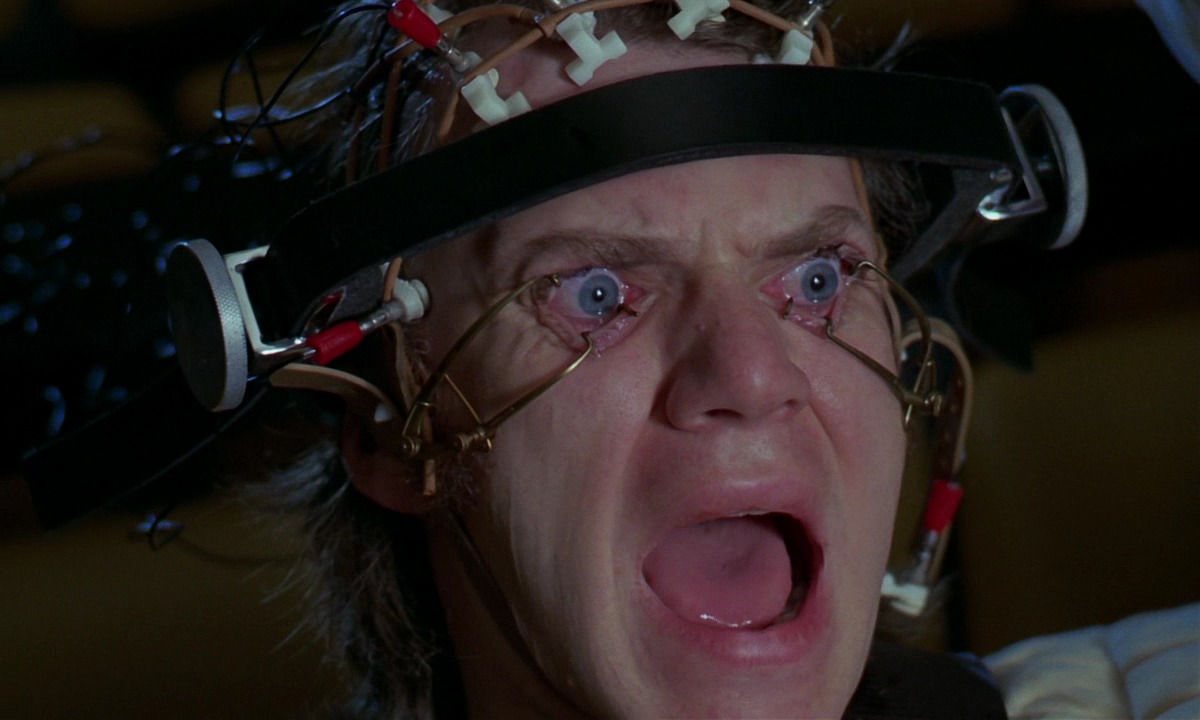
Is the Ludovicho technique a useful and viable way to reduce agressive behaviours or just annulates criminals as human beings?

Once practiced his possibilities to perform evil actions are drastically reduced but far from solving the problem it transforms Alex's life into a torture nightmare. In the end, government actions are criticized and Alex is restored as a hero. No one can deny that such a message was quite controversial back in the early 70s and even if you haven't loved the film (like in my case), you must recognize that the technique didn't eliminate the evil side of Alex, it just imprisoned it; doing the right thing has no value if you don't have the option to choose. Like some philosophers affirm, nor hell nor heaven have sense if man hasn't got the freedom to decide whether to sin or not.
¡Recomienda este blog!