Latest Reviews

Mostrando entradas con la etiqueta 1950s. Mostrar todas las entradas

lunes, 24 de septiembre de 2012

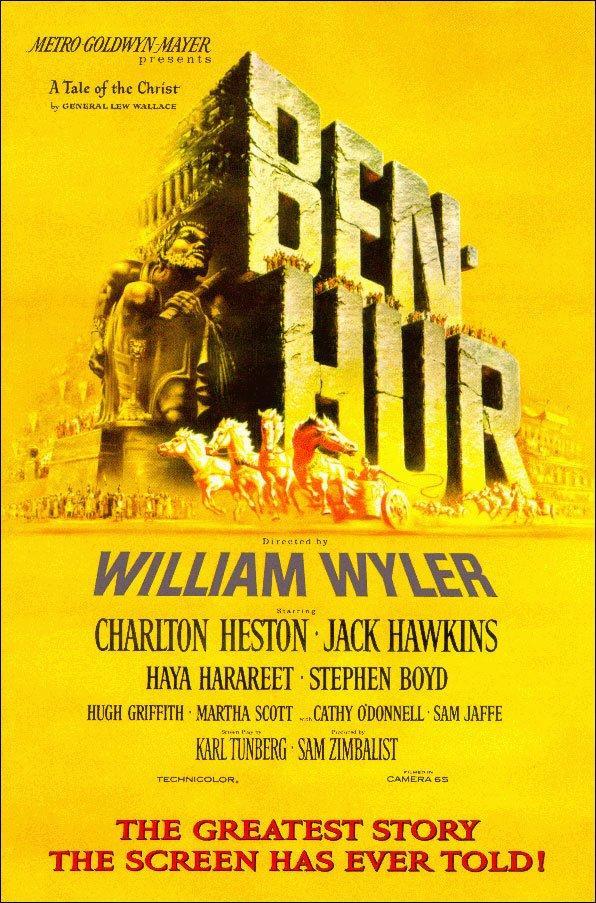
'Ben-Hur' (William Wyler, 1959)


Title: 'Ben-Hur'

Release Year: 1959

Director: William Wyler

Cast: Charlton Heston, Jack Hawkins, Haya Harareet, Stephen Boyd, Hugh Griffith.

Plot: Judah Ben-Hur, a wealthy descendant of an important Jerusalem family, is imprisoned by mistake when a misunderstanding leads his life-time Roman friend Mesala to think that he is attempting against the Romans. After his release, he will have to fight to recover his family and his life.

Review: I only chose Ben-Hur between the films of the research project because I felt obligued by his 11 Academy Award wins. I expected a boring, dull religious-themed war film. I was terribly wrong.

Not ontly has 'Ben-Hur' a marvelous cast, led by a magnificent performance from Charlton Heston, but it's also a raw, shocking epic. One of the most meaningful I've ever seen, it stands as an emotional, entertaining, visually impressive and -in every aspect- enormous masterpiece, which uses the journey of a man to illustrate man's faith and struggles to survive in a savage era, while staying faithful to himself and to his beliefs.

Charlton Heston is flawless and delivers an impeccable performance

Such is its quality that I've loved it even though it features strong religious references. In fact, that is one of the parts I've loved the most. Related to its absolutely perfect structure, the movie connects and intertwines the stories of Ben-Hur and Jesuschrist in a brilliantly executed screenplay, which leads to a miraculous and relieving ending, that seals with a desired happy ending (both for Ben-Hur's family and for his love story with Esther) an incredibly successful movie, an epic to remember.


Winning the race for justice: 'Ben-Hur' made the most of the wide aspect ratio developed for the 1950's wide screens, making of this moral epic something even more impressive

domingo, 23 de septiembre de 2012

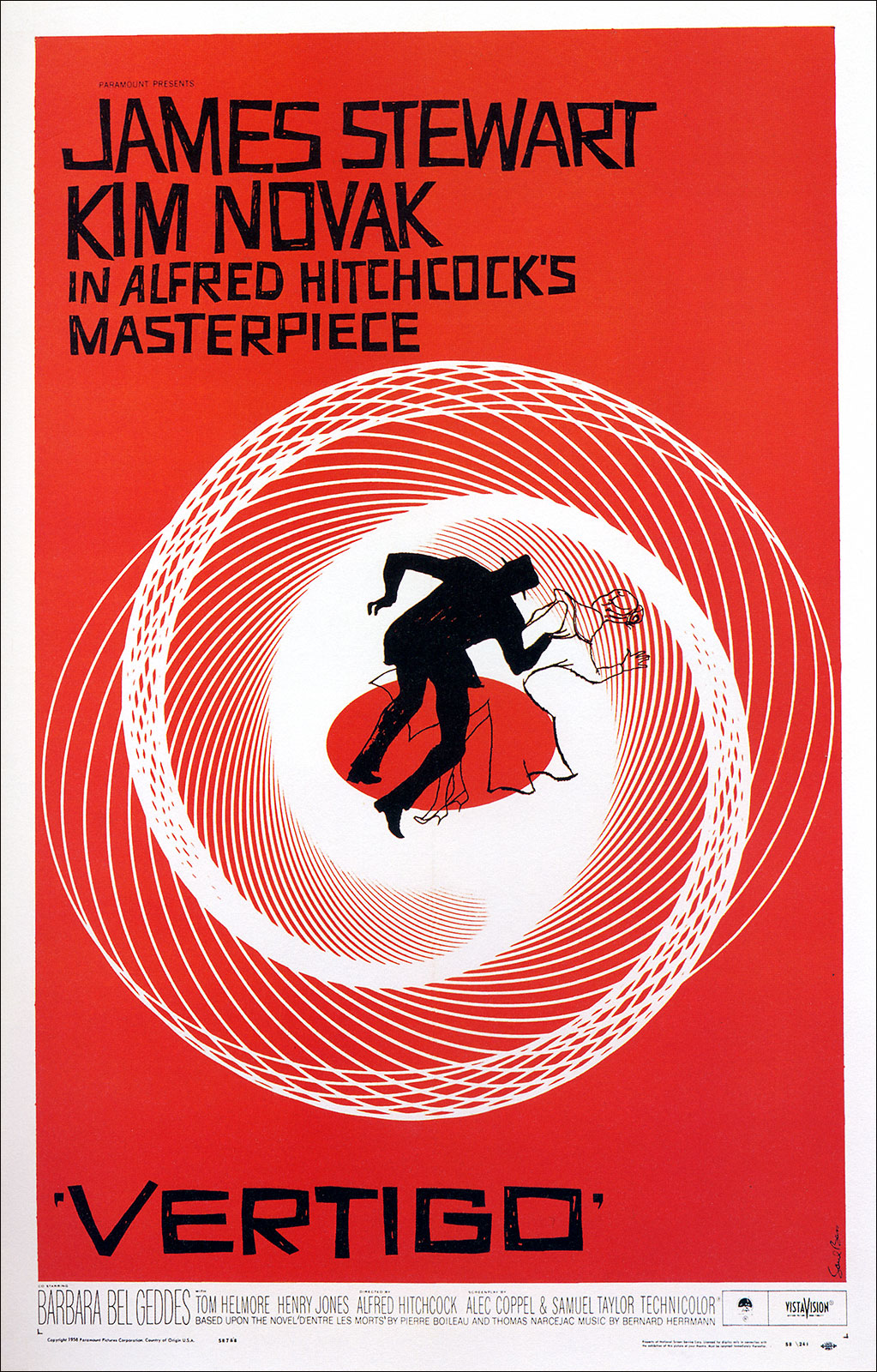
'Vertigo' (Alfred Hitchcock, 1958)


Title: 'Vertigo'

Release Year: 1958

Director: Alfred Hitchcock

Cast: James Stewart, Kim Novak, Barbara Bel Geddes.

Plot: When he decides to retire due to his acrophobia, detective Scottie Fergursson receives a final job; an old friend asks for his help in order to save his enigmatic (and obsessed with her past) wife.

Review: I had great expectations set in this film, as it was the first Hitchchock work I would see and although it hasn't completely disappointed me, it does have some important flaws that prevent it from being the perfect psychological thriller I was waiting for.

But let's start with the positive points; Hitchcok really knows what he's doing and 'Vertigo''s atmosphere would make it a remarkable film even if it was pure rubbish. With a sensational score and a perfect use of the appropiate palette, the film looks and sound exactly as it should.

The second important aspect is the plot. The enigma that covers most of the film succeeds in intriguing the spectator and remains appealing until the end. The problem is that 'the end of the enigma' is not 'the end of the movie'. The truth is unfold too early (more than half an hour before the ending) and that spoils what could have been a powerful final impact, something that doesn't happen in the original novel. Why did Hitchcock have to change it?

A weird love story and an enigmatic plot in which Scottie's acrophobia plays an essential role are the main characteristics of Hitchcock's 'Vertigo'

The rest of the film becomes very strange and somehow creepy, as James Stewart character (unrecognizably changed since he did 'The Philadelphia Story') tries to transform Judy Barton into Madeleine Elster (who are indeed the same person) and they have one of the less credible love stories I've ever seen; Stewart (aged 50 when he did the movie) doubled Novak's age and when he kissed her I felt incredibly uncomfortable, as if something was wrong; in my mind the difference of age was too high and as the two actor didn't stick not even with glue, I had all the time the feeling that a father was kissing his daughter.

Anyway, as I've said before, the film has an inexplicable aura that together with its visual effects, helps to appeal the audience and make people forget that the casting decisions could had been much better.

The weird vistual effects used in the film create the strange feeling that you're being dragged into the protagonist's vertigo sensations

sábado, 22 de septiembre de 2012

'The Searchers' (John Ford, 1956)


Title: 'The Searchers'

Release Year: 1956

Director: John Ford

Cast: John Wayne, Jeffrey Hunter, Vera Miles, Ward Bond, Natalie Wood.

Plot: When half of his family is killed and his niece kidnaped by the red indians, Ethan Edwards starts a journey with Martin Pawley to rescue her.

Review: It's not a big secret that I don't like westerns very much. Especially the ones with a tough completely emotionally flat male lead actor. 'The Searchers' emboes all of those qualities but if I was speaking of American film history, I was in debt with that particular genre.

With the previous information (Ethan Edwards is the sort of character I usually dislike), few things are left to say. Generally it was more entertaining than other westerns I've seen and the relationship between Laurie and Martin was usually amusing. As its most positive side, I think that the who-really-belongs-to-the-family-and-who-does-not plot that sorrounds the movie was a clever attempt to provide a thought-provocative dilemma in Ethan's mind, who initially only seeks the indians for revenge over the death of Martha, who he secretly loved (it is not said, but it's clearly implied).


After being raised by the indians, Ethan no longer considers his niece Debbie part of the family (for most of the film) and even tries to kill her. The debate over the family belonging is one of the most interesting of the film

viernes, 21 de septiembre de 2012

'On the Waterfront' (Elia Kazan,1954)


Title: 'On the Waterfront'

Release Year: 1954

Director: Elia Kazan

Cast: Marlon Brando, Eva Marie Saint, Lee J. Cobb, Karl Malden, Rod Steiger

Plot: Terry Malloy is a failed boxer who works under mafia boss Johnny Friendly orders, but when he's involved in a murder that kills Edie Doyle, he begins to suffer a moral transformation against the injustices of his life.

Review: What many don't know is that in a time when being considered a communist was dangerous, Eliz Kazan used this movie to erase the doubts that existed over him, by comparing the mafia actions with communist actions. Leaving that behind, 'On the Waterfront' is an outstanding film.

To start with, because it's so well designed that at the end, when Terry is beaten nearly to death and the priest arrives to face the obliged silence of the people that had seen it all, you yourself feel the rage against so much injustice. The mafia shown in the movie is nothing but despicable, and if Kazan's mission was making us connect it with communism, then he achieved what he wanted.

But it's no only the unfair situation what creates a link between the spectator and the characters that struggle with the actions of mafia; the real achievement of the movie is Marlon Brando's impeccable performance.

Am I the only one that sees how sweet and desperately missunderstood he is under his tough skin? Brando was definitely perfect in this movie.

I've never been a fan of male performers, as I feel more attached to femenine characters, usually more realistic than the tough leading man. But Brando is an exception to the rule. Officially my new  favorite male actor, he delivers a thought-provoking perfectly executed performance, being troubled yet sensitive and one of the first emotionally-round male characters I've seen in this project. I didn't expect such a nice surprise and neither such a powerul personification, a film that stands out as a whole journey for his messed up protagonist, while offering two hours of a real cinematographic experience.

jueves, 20 de septiembre de 2012

'Singin' in the Rain' (Gene Kelly, 1952)


Title: 'Singin' in the Rain'

Release Year: 1952

Director: Gene Kelly

Cast: Gene Kelly, Donald O'Connor, Debbie Reynolds, Jean Hagen, Millard Mitchell.

Plot: 'Singin' in the Rain' revises the consequences originated by the arrival of Sound Era, while telling a love story that deepens thanks to the art and the power of music.

Review: 'Singin' in the rain' is in many ways a dazzling visual experience. After tons of black and white films, this one is so colourful that you start wanting to sing too.

First of all, the movie is dedicated to the enormous transition that film industry suffered in the late 20s (third one I see about film industry), when 'The Jazz Singer' was released. 'Who the hell wants to hear actors talk' were the misguided words of Harry Warner, because apparently everyone wanted to hear them, as it became a massive revolution. It also details how cynical were some Hollywood relationships, where actors could fake an entire relationship only for the show business.


The famous song 'I'm Singin' in the Rain' performed by Gene Kelly

And while doing this, they never lose the passion for music, in a sweet story that celebrates with a portentous cast our ability to sing when we want to and the joy of being really in love. How the film uses the visual capacities to tell it and overwhelm the spectator is far beyond appreciated as the beauty of the film leaves him with no words to describe the experience.

Soft and colorful illumination has an important paper in the story-telling

The only thing I have to complain about is that although the film goes by at an acceptable pace, the long visual explanation of how the protagonist new film could be breaks the well-built structure of the film and I find it a bit unnecessary, as a mere verbal summany would have been enough.

miércoles, 19 de septiembre de 2012

'Sunset Boulevard' (Billy Wilder, 1950)


Title: 'Sunset Boulevard'

Release Year: 1950

Director: Billy Wilder

Cast: William Holden, Gloria Swanson, Erich von Stroheim, Nancy Olson.

Plot: A broken screenwriter accepts economic help from former silent actress Norma Desmond in exchange of leading her last movie towards a major success.

Review: Second film dedicated to the history of cinema that I see. I simply love when filmmakers explain their own story, and 'Sunset Boulevard' is not an exception.

This time, we see how a reputed silent actress lives her mature days remembering her golden times and how she drags Joe Gillis into her world. Swanson's Norma Desmond is a pretended-to-be naive character that still believes that she's a star, but deep down you can't help but feel sorry for her (as her butler secretly does), as you discover that she's a missunderstood creature that hasn't been able to accept that her time has passed and the cruel world has forgotten her and has protected herself from external attacks in a self-made bubble. No need to say it, Swanson's nearly-insane performance is terrific.

Gloria Swanson at her best, delivers a magnificent performance

Holden's character awakes more mixed reaction. Yes, at the end, he laments that Desmond is going to be humilliated for believing that she's a star and tries to enter some sense in her mind, but he chooses a fake love story with her (clearly prostituting himself) over his real love for Olson's character just for money and then... he abandons her. It doesn't even make sense!

The ending to such a bizarre story is as good as it gets; arrested for murder, her loyal butler decides to maintain the lie a little bit longer, pretending that the TV cameras are indeed for a new DeMille's film she's going to shoot, a part that she happily accepts with the famous line 'All right, Mr. DeMille, I'm ready for my close-up' while she approaches the lens and the screen gets blurry for the last time.


As Joe narrates, Norma Desmond, thinking that she's a star again, heartfully thanks everybody for helping her return to stardom, and closes the film believing that her revival is a reality

martes, 18 de septiembre de 2012

'All About Eve' (Joseph L. Mankiewicz, 1950)


Title: 'All About Eve'

Release Year: 1950

Director: Joseph L. Mankiewicz

Cast: Bette Davis, Anne Baxter, George Sanders, Celeste Holm.

Plot: After starting to be Margo Channing's assistant, Eve Harrington starts to plot a secret plan to take the golden spot she deserves so much.

Review: We are in the 1950s, with a huge crisis in film industry only starting. 'All About Eve' was critically acclaimed, but was also a survivor of the golden age. With a high-level cast led by Bette Davis and Anne Baxter, who can say 'no' to a duel of actresses, both inside and outside the screen?

Davis performs at her best a woman obsessed with her age, whose career is attacked from the very inside by a rising Eve, a woolf hidden under a lamb's skin. But as usual, only Margo sees her opponent's darker intentions, a plan that is unmasked at the end, when Eve reveals herself as a manipulative and clever girl, who will do whatever it takes to take her worshiped actress' place.

A powerul Bette Davis against a clever and evil Anne Baxter, while an unknown Marilyn Monroe observes the sceen in one of her first important roles. What else can you ask for?

I loved how the story was told with multiple points of view in terms of narrative style and, reaching a higher intensity as film goes by, there's nothing like watching both leading ladies turning crazy and evil for what is supposed to belong to them in a portrait of greed in film industry. The plot might not be groundbreaking but is perfectly built and structured, and performed without an inch of overacting. Finally, the ending is a funny wink to the spectator, who sees how Eve gets a new assistant, repeating the story initiated with Margo without her even noticing it.
¡Recomienda este blog!