Latest Reviews

Mostrando entradas con la etiqueta 1927-1960. Mostrar todas las entradas

lunes, 24 de septiembre de 2012

'Ben-Hur' (William Wyler, 1959)


Title: 'Ben-Hur'

Release Year: 1959

Director: William Wyler

Cast: Charlton Heston, Jack Hawkins, Haya Harareet, Stephen Boyd, Hugh Griffith.

Plot: Judah Ben-Hur, a wealthy descendant of an important Jerusalem family, is imprisoned by mistake when a misunderstanding leads his life-time Roman friend Mesala to think that he is attempting against the Romans. After his release, he will have to fight to recover his family and his life.

Review: I only chose Ben-Hur between the films of the research project because I felt obligued by his 11 Academy Award wins. I expected a boring, dull religious-themed war film. I was terribly wrong.

Not ontly has 'Ben-Hur' a marvelous cast, led by a magnificent performance from Charlton Heston, but it's also a raw, shocking epic. One of the most meaningful I've ever seen, it stands as an emotional, entertaining, visually impressive and -in every aspect- enormous masterpiece, which uses the journey of a man to illustrate man's faith and struggles to survive in a savage era, while staying faithful to himself and to his beliefs.

Charlton Heston is flawless and delivers an impeccable performance

Such is its quality that I've loved it even though it features strong religious references. In fact, that is one of the parts I've loved the most. Related to its absolutely perfect structure, the movie connects and intertwines the stories of Ben-Hur and Jesuschrist in a brilliantly executed screenplay, which leads to a miraculous and relieving ending, that seals with a desired happy ending (both for Ben-Hur's family and for his love story with Esther) an incredibly successful movie, an epic to remember.


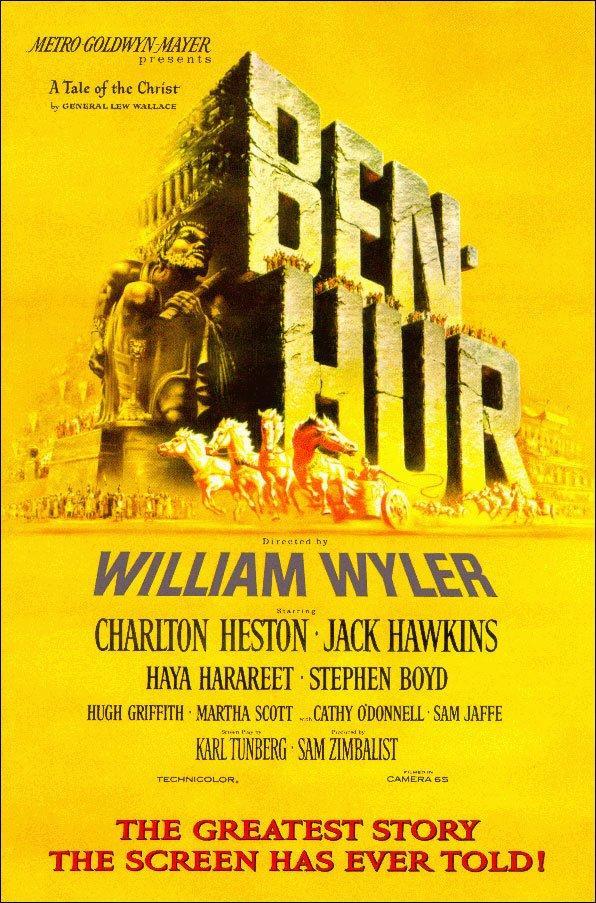
Winning the race for justice: 'Ben-Hur' made the most of the wide aspect ratio developed for the 1950's wide screens, making of this moral epic something even more impressive

domingo, 23 de septiembre de 2012

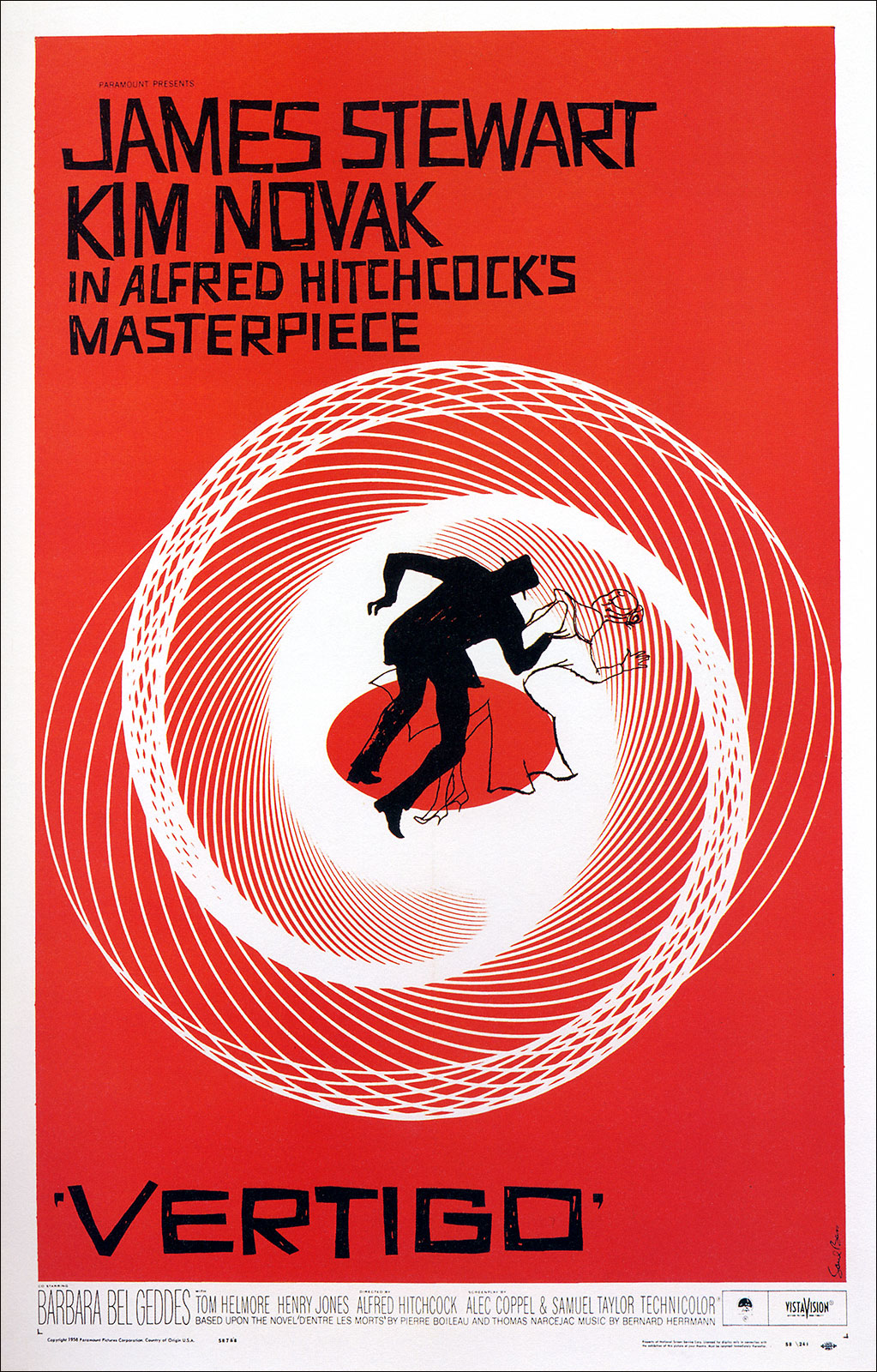
'Vertigo' (Alfred Hitchcock, 1958)


Title: 'Vertigo'

Release Year: 1958

Director: Alfred Hitchcock

Cast: James Stewart, Kim Novak, Barbara Bel Geddes.

Plot: When he decides to retire due to his acrophobia, detective Scottie Fergursson receives a final job; an old friend asks for his help in order to save his enigmatic (and obsessed with her past) wife.

Review: I had great expectations set in this film, as it was the first Hitchchock work I would see and although it hasn't completely disappointed me, it does have some important flaws that prevent it from being the perfect psychological thriller I was waiting for.

But let's start with the positive points; Hitchcok really knows what he's doing and 'Vertigo''s atmosphere would make it a remarkable film even if it was pure rubbish. With a sensational score and a perfect use of the appropiate palette, the film looks and sound exactly as it should.

The second important aspect is the plot. The enigma that covers most of the film succeeds in intriguing the spectator and remains appealing until the end. The problem is that 'the end of the enigma' is not 'the end of the movie'. The truth is unfold too early (more than half an hour before the ending) and that spoils what could have been a powerful final impact, something that doesn't happen in the original novel. Why did Hitchcock have to change it?

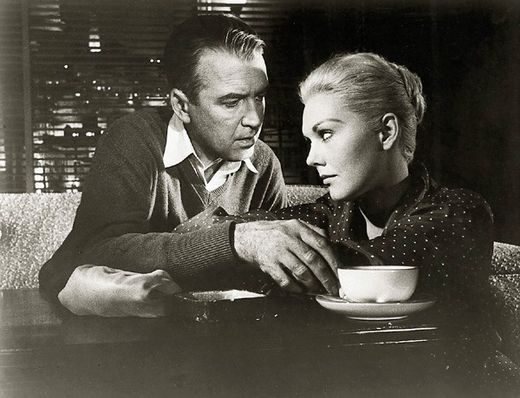
A weird love story and an enigmatic plot in which Scottie's acrophobia plays an essential role are the main characteristics of Hitchcock's 'Vertigo'

The rest of the film becomes very strange and somehow creepy, as James Stewart character (unrecognizably changed since he did 'The Philadelphia Story') tries to transform Judy Barton into Madeleine Elster (who are indeed the same person) and they have one of the less credible love stories I've ever seen; Stewart (aged 50 when he did the movie) doubled Novak's age and when he kissed her I felt incredibly uncomfortable, as if something was wrong; in my mind the difference of age was too high and as the two actor didn't stick not even with glue, I had all the time the feeling that a father was kissing his daughter.

Anyway, as I've said before, the film has an inexplicable aura that together with its visual effects, helps to appeal the audience and make people forget that the casting decisions could had been much better.

The weird vistual effects used in the film create the strange feeling that you're being dragged into the protagonist's vertigo sensations

viernes, 21 de septiembre de 2012

'On the Waterfront' (Elia Kazan,1954)


Title: 'On the Waterfront'

Release Year: 1954

Director: Elia Kazan

Cast: Marlon Brando, Eva Marie Saint, Lee J. Cobb, Karl Malden, Rod Steiger

Plot: Terry Malloy is a failed boxer who works under mafia boss Johnny Friendly orders, but when he's involved in a murder that kills Edie Doyle, he begins to suffer a moral transformation against the injustices of his life.

Review: What many don't know is that in a time when being considered a communist was dangerous, Eliz Kazan used this movie to erase the doubts that existed over him, by comparing the mafia actions with communist actions. Leaving that behind, 'On the Waterfront' is an outstanding film.

To start with, because it's so well designed that at the end, when Terry is beaten nearly to death and the priest arrives to face the obliged silence of the people that had seen it all, you yourself feel the rage against so much injustice. The mafia shown in the movie is nothing but despicable, and if Kazan's mission was making us connect it with communism, then he achieved what he wanted.

But it's no only the unfair situation what creates a link between the spectator and the characters that struggle with the actions of mafia; the real achievement of the movie is Marlon Brando's impeccable performance.

Am I the only one that sees how sweet and desperately missunderstood he is under his tough skin? Brando was definitely perfect in this movie.

I've never been a fan of male performers, as I feel more attached to femenine characters, usually more realistic than the tough leading man. But Brando is an exception to the rule. Officially my new  favorite male actor, he delivers a thought-provoking perfectly executed performance, being troubled yet sensitive and one of the first emotionally-round male characters I've seen in this project. I didn't expect such a nice surprise and neither such a powerul personification, a film that stands out as a whole journey for his messed up protagonist, while offering two hours of a real cinematographic experience.

jueves, 20 de septiembre de 2012

'Singin' in the Rain' (Gene Kelly, 1952)


Title: 'Singin' in the Rain'

Release Year: 1952

Director: Gene Kelly

Cast: Gene Kelly, Donald O'Connor, Debbie Reynolds, Jean Hagen, Millard Mitchell.

Plot: 'Singin' in the Rain' revises the consequences originated by the arrival of Sound Era, while telling a love story that deepens thanks to the art and the power of music.

Review: 'Singin' in the rain' is in many ways a dazzling visual experience. After tons of black and white films, this one is so colourful that you start wanting to sing too.

First of all, the movie is dedicated to the enormous transition that film industry suffered in the late 20s (third one I see about film industry), when 'The Jazz Singer' was released. 'Who the hell wants to hear actors talk' were the misguided words of Harry Warner, because apparently everyone wanted to hear them, as it became a massive revolution. It also details how cynical were some Hollywood relationships, where actors could fake an entire relationship only for the show business.


The famous song 'I'm Singin' in the Rain' performed by Gene Kelly

And while doing this, they never lose the passion for music, in a sweet story that celebrates with a portentous cast our ability to sing when we want to and the joy of being really in love. How the film uses the visual capacities to tell it and overwhelm the spectator is far beyond appreciated as the beauty of the film leaves him with no words to describe the experience.

Soft and colorful illumination has an important paper in the story-telling

The only thing I have to complain about is that although the film goes by at an acceptable pace, the long visual explanation of how the protagonist new film could be breaks the well-built structure of the film and I find it a bit unnecessary, as a mere verbal summany would have been enough.

miércoles, 19 de septiembre de 2012

'Sunset Boulevard' (Billy Wilder, 1950)


Title: 'Sunset Boulevard'

Release Year: 1950

Director: Billy Wilder

Cast: William Holden, Gloria Swanson, Erich von Stroheim, Nancy Olson.

Plot: A broken screenwriter accepts economic help from former silent actress Norma Desmond in exchange of leading her last movie towards a major success.

Review: Second film dedicated to the history of cinema that I see. I simply love when filmmakers explain their own story, and 'Sunset Boulevard' is not an exception.

This time, we see how a reputed silent actress lives her mature days remembering her golden times and how she drags Joe Gillis into her world. Swanson's Norma Desmond is a pretended-to-be naive character that still believes that she's a star, but deep down you can't help but feel sorry for her (as her butler secretly does), as you discover that she's a missunderstood creature that hasn't been able to accept that her time has passed and the cruel world has forgotten her and has protected herself from external attacks in a self-made bubble. No need to say it, Swanson's nearly-insane performance is terrific.

Gloria Swanson at her best, delivers a magnificent performance

Holden's character awakes more mixed reaction. Yes, at the end, he laments that Desmond is going to be humilliated for believing that she's a star and tries to enter some sense in her mind, but he chooses a fake love story with her (clearly prostituting himself) over his real love for Olson's character just for money and then... he abandons her. It doesn't even make sense!

The ending to such a bizarre story is as good as it gets; arrested for murder, her loyal butler decides to maintain the lie a little bit longer, pretending that the TV cameras are indeed for a new DeMille's film she's going to shoot, a part that she happily accepts with the famous line 'All right, Mr. DeMille, I'm ready for my close-up' while she approaches the lens and the screen gets blurry for the last time.


As Joe narrates, Norma Desmond, thinking that she's a star again, heartfully thanks everybody for helping her return to stardom, and closes the film believing that her revival is a reality

martes, 18 de septiembre de 2012

'All About Eve' (Joseph L. Mankiewicz, 1950)


Title: 'All About Eve'

Release Year: 1950

Director: Joseph L. Mankiewicz

Cast: Bette Davis, Anne Baxter, George Sanders, Celeste Holm.

Plot: After starting to be Margo Channing's assistant, Eve Harrington starts to plot a secret plan to take the golden spot she deserves so much.

Review: We are in the 1950s, with a huge crisis in film industry only starting. 'All About Eve' was critically acclaimed, but was also a survivor of the golden age. With a high-level cast led by Bette Davis and Anne Baxter, who can say 'no' to a duel of actresses, both inside and outside the screen?

Davis performs at her best a woman obsessed with her age, whose career is attacked from the very inside by a rising Eve, a woolf hidden under a lamb's skin. But as usual, only Margo sees her opponent's darker intentions, a plan that is unmasked at the end, when Eve reveals herself as a manipulative and clever girl, who will do whatever it takes to take her worshiped actress' place.

A powerul Bette Davis against a clever and evil Anne Baxter, while an unknown Marilyn Monroe observes the sceen in one of her first important roles. What else can you ask for?

I loved how the story was told with multiple points of view in terms of narrative style and, reaching a higher intensity as film goes by, there's nothing like watching both leading ladies turning crazy and evil for what is supposed to belong to them in a portrait of greed in film industry. The plot might not be groundbreaking but is perfectly built and structured, and performed without an inch of overacting. Finally, the ending is a funny wink to the spectator, who sees how Eve gets a new assistant, repeating the story initiated with Margo without her even noticing it.

lunes, 17 de septiembre de 2012

'The Best Years of Our Lives' (William Wyler, 1946)

Title: 'The Best Years of Our Lives'

Release Year: 1946

Director: William Wyler

Cast: Fredric March, Dana Andrews, Harold Russell, Myrna Loy, Teresa Wright, Virginia Mayo and Cathy O'Donnell.

Plot: After returning from war, three soldiers will have to face a society that has changed while they were fighting, for better and or worse.

Review: When I chose this movie, critically acclaimed and a box-office hit of its time, I did it cause I wanted to see a psychological portrait of the scars that war leaves in soldier's minds. 'The Best Years of Our Lives' doesn't quite live to such expectations, but does a nice job, trying to explain the thought adaptation of its three leading characters.

Each of them has compelling stories; from the day to day technical problems of losing both hands, to the return home to a society that has forgotten that you fought for them and in which you must keep doing a low profile job to maintain yourself economically.

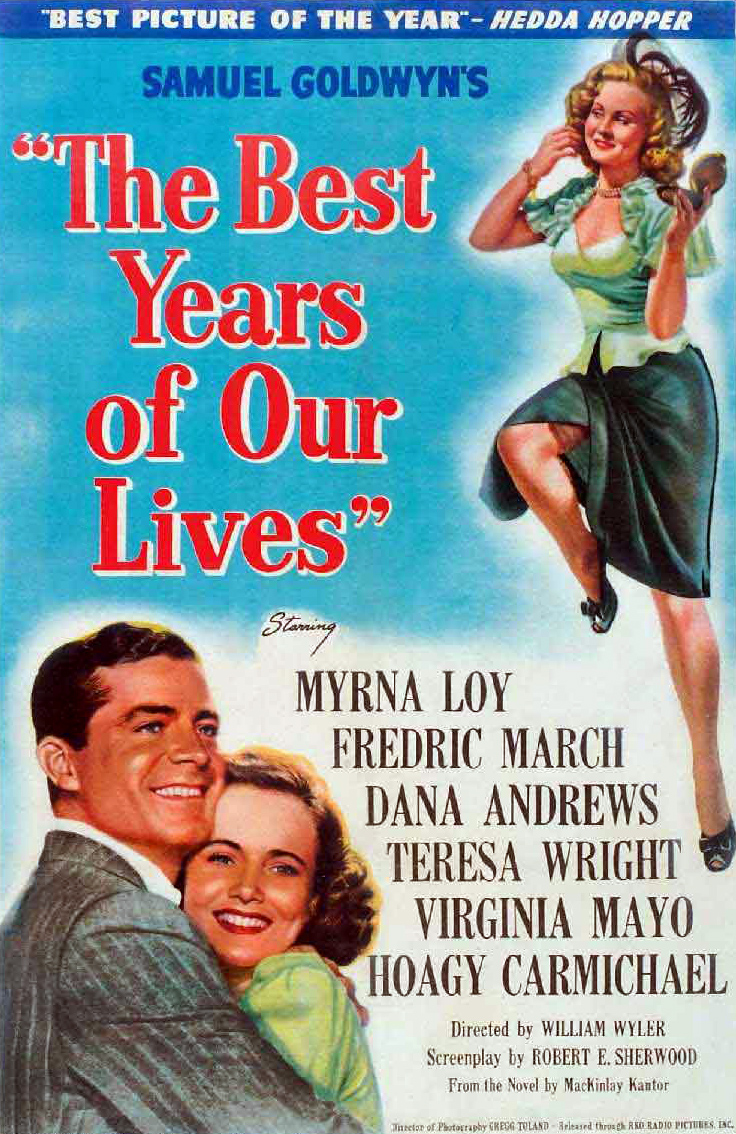
The well-casted leading men

March, Andews and Russell (who was a real life amputee) are at their best portraying each of them, creating compelling actors with thought-provoking stories. My only complain might be the tendency to patriotism and happy endings that drowned movies those days, especially for the cheesy performance of Cathy O'Donnell, which spoils the love story of her character with Harold Russell's one, something that doesn't happen with the beautifully constructed relationship of Captain Fred Derry and Peggy Stephenson.

It isn't a proper Hollywood ending if it hasn't got a good final kiss for the love story, is it?

domingo, 16 de septiembre de 2012

'Casablanca' (Michael Curtiz, 1942)


Title: 'Casablanca'

Release Year: 1942

Director: Michael Curtiz

Cast: Humphrey Bogart, Ingrid Bergman, Paul Henreid, Claude Rains.

Plot: In the heat of the World War II, Casablanca was a traverse city that was used to arrive to Portugal, and then to America. But for Rick Blaine and Ilsa Lund it's the place where they recover and lose a love estranged by war time.

Review: Hollywood's Goledn Age love story. And maybe the most important of all cinema history. Casablanca will always be remembered as the smoky town which saw the impossible love of Bogart and Bergman.

To understand this review is very important watching the movie first. If you don't do it, you won't see what makes people love this movie. And that is the film itself. The story on its own is beautiful, yes. And the characters live their love while fighting agains the circumstances. He plays the tough man role while the past hits him when she arrives by the hand of another man, secretly still in love with him and with her heart split between heading to America or staying. That's the kind of love story people falls in love with, even with his coldness and her lack of directive, but it's not what finally hits you, at least, not after having watched it and recalled it, which is what it's done with good classic cinema.

Humphrey Bogart and Ingrid Bergman as lovers stranged by war, in their mysterious yet romantic characters

What hits you is the atmospheare; everything that sorrounds casablanca is impregnated with it; a melancholic yet powerful feeling of watching the love story of a lifetime. It intoxicates you and no matter how things may turn, you end up being absorved by the story.

Its a difficult feeling to explain, as many other created by good cinema, but when you think of the film and recall 'As the time goes by' in you head, you can't heap but feeling a weird sensation, this iconic, classic, smoky sensation that the picture spreads throught its whole run.


"Play it, Sam. Play 'As Time Goes By'"

That's Casablanca. And its iconic scenes, and its quotes ('Louis, I think this is the beginning of a beautiful friendship' has transitioned to popular culture, for example, marking the bond between Bogar and Rains' character's). That's why it remains as Golden Age's love story, because its the tragic love that stayed in the city when she left and was tied to its essence. An impossible one, tied forever with film history as Bogart pronounced his famous words, after all, We'll always have Paris.


Bogart and Bergman's farewell is still remembered as one of cinema's most famous and beloved scenes

sábado, 15 de septiembre de 2012

'Citizen Kane' (Orson Welles, 1941)


File:Citizenkane.jpg
Title: 'Citizen Kane'

Release Year: 1941

Director: Orson Welles

Cast: Orson Welles, William Alland, Ray Collins, Dorothy Comingore, Joseph Cotten.

Plot: An important business man, Charles Foster Kane, dies in Xanadú, his oriental style castle. His last word - Rosebud - generates enormous curiosity and leads a group of journalists to investigate his life in order to solve the mysterious enigma.

Review: Named several times as the best movie of all time, Citizen Kane was world reknown for its innovation in story telling structure. But what does this exactly mean?

Well, summing up, the film was praised for using three characters, each one connected to a part of Kane's life and, by flashbacks, explaining the story from the beginning to the end, that is, from the past to the present. Some may ask: that's all? That's all it takes to reach the 1st position in cinema rankings? Well, there are two things that must be added to the explanation. The first one is that we are at the beginning of the 40s. Hollywood has imposed the lineal story as a way to attrack audiences to the theatres, there's no need to complicate things. Welle's picture was a glowing star in the middle of the already golden age, showing us that other ways were possible.

The second one is how flawless the structure was. Even if now it's not that strange and new filmmakers have created more complex structures, the film is so well constructed that the story just flows through it without a single trouble. The timing, the sections; all is calculated to result in perfect harmony.

'Citizen Kane' had a revolutionary story-telling

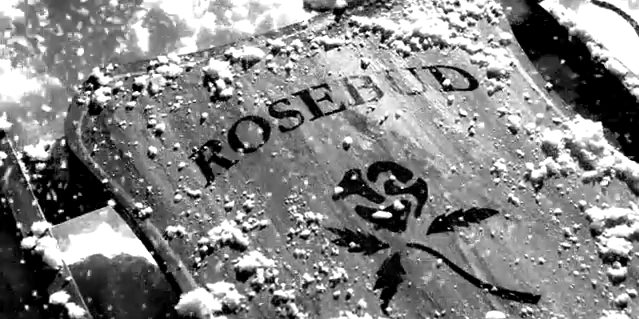
And then there's the mystic enigma. "Rosebud". I admire how with a simple word they're able to catch the audience so much. That's the key of good movies; they give you reasons to love the movie even before you've ended watching them. As the film goes by and the performances consolidate with it, the mystery just rises and rises, rising the movie with it. It's infallible, reaching the end with the spectator biting his nails.

At the end, it's always very hard to meet the expectations, but 'Citizen Kane' surprisingly does. While I had accepted the theory that the enigma was a missing part in Kane's life, a piece that just didn't exist I was very surprised when I saw the name 'Rosebud' printed in his chilhood sled (suddenly understanding why he died while holding a snow globe). That had been missing, his childhood: money made him buy everybody and everybody's love; money spoiled him. All he ever wanted was to be a normal kid with his family and a sled to play when it snowed. That's the final trick; we're so focused on following the marks of a mystery left accidentally, the facts of the exterior persona, that we don't realize that it was his subconscious that left the hint; a key that could lead someone to see his buried cry for help, a cry lost in time as his sled was.


Film history most famous enigma was infact the lost chilhood of a spoiled, yet lonely, old man. A final scream to go back to the past

viernes, 14 de septiembre de 2012

'The Philadelphia Story' (George Cukor, 1940)


File:The-Philadelphia-Story-(1940).jpg
Title: The Philadelphia Story

Release Year: 1940

Director: George Cukor

Cast: Cary Grant, Katherine Hepburn, James Stewart, Ruth Hussey.

Plot: As Tracy Lord and George Kittredge are getting married, journalists Macauley Connor and Elizabeth Imbrie attend the wedding, where the most unbelieveable sort of things happen.

Review: After the last remarkable and transcendental films, this one surely may seem a stop in the road, and maybe it is, but the presence of Hepburn in any movie makes of it a worth watching one.

If asked for a characteristic that defines 'The Philadelphia Story' better than any other, that is, without a doubt, its weird humour. This kind of uncomfortable sudden lines thrown by the characters (mainly by Ruth Hussey, my favourite supporting one) that splash the film as it moves on towards the wedding.

File:Philadelphia Story 19.jpg
Ruth Hussey gives an outstanding performance as Elizabeth Imbrie

In such a turmoil, with the frantic wedding coming closer and closer, a leading figure that leads the film is essential. That is, of course, the wonderful Katherine Hepburn, who gives here a secure and powerful performance, where she demonstrates her strong presence. Her character is a dreamy 'goddess' (as named in the picture) who controls the situation as much as she's able to, in every aspect except in her own persona, where she's lonely and afraid of her own power. Why is she not happy when her husband-to-be names her as that goddess? Well, that's the main topic which is unfold trhough the movie and fully developes at the very end.

There was and will ever be no one with the presence on screen of Katherine Hepburn. After some box-office bombs in the 30s, she's said to have recovered her career with this film

The reason is the one that makes Tracy not marry his fiancé, or Macauley when he asks her to. And the same one that makes her fall in her ex-husband arms again; she goes back with him because he's the only one that doesn't adore her as a goddess but loves her as a human being. That's why she's so afraid yet attracted to him; in a world where the light of the spotlight is everywhere for her, he's the only one capable to see not only her powerful outside but his vulnerable inside.

jueves, 13 de septiembre de 2012

'The Great Dictator' (Charlie Chaplin, 1940)


Title: 'The Great Dictator'

Release Year: 1940

Director: Charlie Chaplin

Cast: Charlie Chaplin, Paulette Goddard, Jack Oakie.

Plot: Adenoid Hynkel is the tyrannical dictator of Tomania. An unnamed Jew is a once private that now survives as a poor barber in the ghetto. They exist in separate yet not independent worlds that will cross thanks to their big resemblance.

Review: After watching 'Modern Times' (which I liked but not loved due to the proximity with which I had seen previous Chaplin movies), 'The Great Dictator' will be the last Charlie Chaplin film I'll see for this project. Before doing it, the expectations were rather high. Now? They've been completely fullfilled.

There are many reasons why I recall this movie the best of Chaplin that I've seen (even better than 'The Kid'). First, I absolutely loved Hynkel. His dictator is a complex and wonderful creation; emotionally unstable and insecure. I love his agressive attacks in German, and the way he says thousands of things which are just a few words in other languages. There's nothing of him I didn't like. Add to this the hypnotic magic scene he performs when playing with a globe and you'll have a round character.
The fairy score and Chaplin at his finest and best create pure magic

Moreover, that's his first talkie. I wonder why he didn't do any other before. Maybe because he didn't need it; with his star status he could still sell silent pictures and his humour could be fully developed in those. Anyway, his speaking side is also wonderful, thanks to his nice voice and lovely British accent.

What else can be said? Everything mentioned plus his always sweet tramp makes of this film a message of love with plenty of sweetness and fun. After the terror that spreads when the Germans go to the ghetto, that's the final conclusion the film wants to give. Yes, Chaplin put himself in a delicate position with this movie, assotiating his name to politics in a dangerous time, but without that quantity of risk, we would've never been able to see such a beautiful movie. Such a beautiful ending. Such a beautiful message, direct from him to the world and to his beloved Hannah: HOPE.


"Look up Hannah, look up!" Chaplin's best performance to the date concludes with his famous speech

miércoles, 12 de septiembre de 2012

'Gone with the Wind' (Victor Fleming, 1939)


File:Poster - Gone With the Wind 01.jpg
Title: 'Gone with the Wind'

Release Year: 1939

Director: Victor Fleming

Cast: Clark Gable, Vivien Leigh, Leslie Howard, Olivia de Havilland, Hattie McDaniel.

Plot: Scarlett O'Hara is a beatutiful, selfish, greedy woman whose world and life will be turned upside down when civil war hits the country and, by extension, her beloved Tara.

Review: 'Gone with the Wind'. The famous (and long) 'Gone with the Wind'. It's one of those movies you've seen plenty of times on TV but you've never had the will power to watch entirely. Well, once you finally do it, you don't regret it.

Yes, maybe I had to make a break every 2 hours to rest, but even with its extreme length it's a big, powerful movie with huge performances, especially the great Scarlett O'Hara performed by Leigh. In fact, I think it's its length what makes it so huge. It'a a feeling of completion; the film explains war from the beginning to the end. It's so wide that it had time for every bit of it, making of Fleming's immense creation a work of art and an epic classic.

Another aspect that has been widely discussed, it's Rhett and O'hara's relationship. Did she ever love him? I think so. All the time? Maybe. Perhaps she was just too confused and distracted with Ashley to realize it. The ending proves it: once she discovers that her love for him is not requited (as she all the time thought it was, although he couldn't admit it) she realises how much she has made Rhett suffer and how much she misses him (too late, maybe?). Anyway, they surely have a rocky relationship (no wonder why it's said that the actors hated each other); even once married it was like seeing old hollywood golden life that sparkles in the outside but it's rotten in the inside.

And O'Hara? She's been named many things, but in my opinion, she just was clever. Clever enough to see that if she wanted to survive, she had to forget her scrupulousness and do whatever she could, as she herself says in the iconic 'I'll never be hungry again' scene.

Leigh's iconic quote:"As god is my witness, I'll never be hungry again!"

Yes, if 'Gone with the Wind' is somthing, that's iconic. From its powerful score, through her characters (including McDaniel's Mammy or the honest and good Melanie Hamilton) to its gorgeous ending. Because, even with its few flaws, it leaves us devastated with its 4-hours duration, convincing us that, "after all, tomorrow is another day".


Ending her greates movie, Leigh looks to the future while saygin her famous 'After all, tomorrow is another day!'

martes, 11 de septiembre de 2012

'The Wizard of Oz' (Victor Fleming, 1939)


Title: 'The Wizard of Oz'

Release Year: 1939

Director: Victor Fleming

Cast: Judy Garland, Frank Morgan, Ray Bolger, Jack Haley, Bert Lahr, Billie Burke, Margaret Hamilton.

Plot: Dorothy dreams of travelling to 'somewhere over the rainbow', and that's exactly what she does when, after a big tornado, she finds herself very far away from her native Kansas.

Review: I simply LOVED this movie. What a beautiful surprise! I expected it to be just a children's tale, but it exceeded every expectation.

To start with, the transition between real world and Oz using technicolor is nothing but remarkable. The difference between both places and the magic that spreads the second one are in part thanks to that detail. In Kansas, everything is sad for Dorothy and the environment is gloomier, while a pinch of hopelessness is seen in her eyes when her dog is going to be killed. A way to restore that lost hope in the viewer: her magnificent voice.

'Somewhere Over the Rainbow' performed by Judy Garland in the movie

Seriously, what a voice! Every time I'm sad and I listen to that song, I close my eyes and everything looks better. It's like it had a healing power. I still wonder why they wanted to cut it off...

Anyway, once in Oz, everything reaches a dreamy pitch. In a world populated by real faces transformed in scarecrows and witches, everytime I heard the famous 'We're off to see the wizard, the wonderful wizard of Oz' sung in the characters way through the yellow brick road, I couldn't help but start singing. It was like if I was a kid again, but who wouldn't? With much less technology facilities than nowadays, Fleming and Garland created a dreamy world that spreads so much magic that it is impossible not to lose yourself in it.

Follow the Yellow Brick Road: We're off to see the wizard, the wonderful wizard of Oz! We've heard he is a Wiz of a Wiz...

Speaking of Garland. 'The Wizard of Oz' is her. From the tip of its toes to the bottom of its head. Garland gives here a magnificent performance that, together with her voice and her heart-breaking crying scenes, makes of her the perfect and only Dorothy.

What else can be said of such an endearing story apart that it's now one of my favourite films? Well, just as and ending question; all the way to the wizard just to discover that he has no powers? And then Dorothy could have returned to Kansas at the very beginning! It's true that it was necessary for her to stay in Oz to see how much she missed home, but still... Well, as Dorothy would say, There's no place like home.

lunes, 10 de septiembre de 2012

'Modern Times' (Charles Chaplin, 1936)


Title: 'Modern Times'

Release Year: 1936

Director: Charles Chaplin

Cast: Charles Chaplin, Paulette Goddard.

Plot: After losing his mind (and his job) over the frantic work life, a workman will have to struggle against the situation instituted by Industrial Revolution, while discovering a beautiful friendship with an orphaned young girl.

Review: One of the things I like the most about Chaplin is his ability to connect with the social problems of society (and how he manages to achieve this while staying silent in sound era ten years after the invention of Vitaphone). After years of higher than normal unemployment numbers, this movie was a clear reflexion of the crazy world they lived in. A world that we still inhabit sometimes.

Every scene of the film is an example of that and of Chaplin's mastery: the sheep's metaphore of workers entering the factory, how they have to deal with all kind of exigences or experiments, how they're treated like one of many who would give anything to work... Chaplin uses all this and a tramp gone crazy to exemplify his modern days situation. As always, we'll see him trying to do everything right but failing miserably with a comedy level only he owns.


Who doesn't remember this iconic scene?

But my favourite parts are, without a doubt, the ones she shares with future real life wife Paulette Goddard. Their strange relationship is a weird friendship between two human beings trying to survive. Endearing, isn't it? Chaplin films always are. And that's perhaps what made him so famous; his ability to make us laugh at the same time that he touched something inside of us. The finest example? The ending (a detail that he controls and beautifies in every movie), features both a beautiful score and one of the topics that you find in more than one of his pictures; hope, giving to the viewer the promise of a better tomorrow.

sábado, 8 de septiembre de 2012

'It Happened One Night' (Frank Capra, 1934)


Title: 'It Happened One Night'

Release Year: 1934

Director: Frank Capra

Cast: Clark Gable, Claudette Colbert, Walter Conolly.

Plot: Ellie Andrews, tired of his controlling father, escapes one day and begins a trip to join the man she's married (who her father doesn't approve of). What she may not now is that many surprises are waiting for her on the road...

Review: Best picture, director, actor, actress and writing. This was the first film in cinema history to win the 'big five' Academy Awards. Does it deserve them?

Well, while it might not be my favourite movie, it has many aspects to be remembered. 'It happened one night' is an entertaining and funny journey lead by the strong performances of Gable and Colbert. During it, it's not difficult to see the good chemistry both actors had and how that affected their characters.


Watching how Ellie and Peter's love-hate relationship works is the main success the film achieves

Secondly, the screenplay was really an intelligent one; the adventure iniciated by Ellie and Peter is both credible and entertaining, creating an ideal environment for what would be a blossoming romance.

And finally, I love how both personages interact; his determined and easy-going nature contrasts with her usual bad mood and difficult persona. How they affect one another's manners is endearing and makes of this film an interesting and ageless tale about a romance that 'happened one night', featuring one of the most curious endings and subtle ways to describe sex that I've ever seen, using a simple blanket as the infamous 'Jericho Walls'.

jueves, 6 de septiembre de 2012

'King Kong' (Merican C. Cooper and Ernest B. Schoedsack, 1933)


Title: 'King Kong'

Release Year: 1933

Director: Merican C. Cooper and Ernest B. Schoedsack

Cast: Bruce Cabot, Robert Amstrong, Fay Wray.

Plot: After casting Ann Darrow as the lead actress in his next movie, Carl Denham and his team make their way to a mysterious island full of dangers, an experience that leads to a monstrous discovery.

Review: It's quite curious to see how films that now become blockbusters thanks to their big budgets are remakes of movies made many years ago, even with a much lower technology. That's the case of 'King Kong': we may have heard of Peter Jackson's 2005 film, but would we believe the same story was told more than 70 years ago?

Back in 1933, the wild primate became a huge hit and the movie he led, an outstanding piece of technical innovation. Of course if you see it now it's horribly fake. Some of the scenes are even funny but, somehow they still manage to scare you to death. I think that's the greatness of Kong's; even mixing dinosaurs and giant gorillas on an island with variable success, its entertaining power never goes away.


The well-known scene of a cinema classic

Add to that a well-chosen cast (specially Robert Amstrong's cool character and performance) and the joy of watching such iconic scenes like Ann screaming at the vision of Kong or him climbing the Empire State Building, and you will have a solid, terrifying, amusing piece of work, which even has time for a little bit of romance. Yes, I had thought that eventually, Ann would stop just shouting and would understand the beast's feelings for her, but the film ending with Amstrong's terrific quote 'It was beauty killed the beast' makes up por previous flaws.

miércoles, 5 de septiembre de 2012

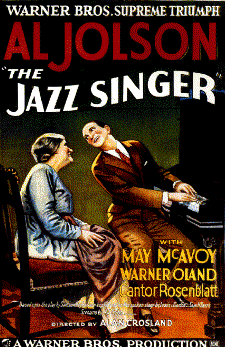
'The Jazz Singer' (Alan Crosland, 1927)


Title: 'The Jazz Singer'

Release Year: 1927

Director: Alan Crosland

Cast: Al Jonson, May McAvoy, Warner Oland, Eugenie Besserer.

Plot: After leaving his home as a kid because his jazz singer aspirations collided with his traditional and devout Jewish father (who raises him to be a cantor), Jakie Rabinowitz (now named Jack), tries to earn a living as an entertainer. What he doesn't know is that even years after his dispute with his father, his Jewish roots will call him again.

Review: "Wait a minute, wait a minute, you ain't heard nothin' yet! Wait a minute, I tell ya! You ain't heard nothin'! You wanna hear "Toot, Toot, Tootsie"? All right, hold on, hold on... [walks back to one of the band members] Lou, listen. Play "Toot, Toot, Tootsie", three chorus, you understand. In the third chorus, I whistle. Now give it to 'em hard and heavy, go right ahead". Those were the words that made history. 


Jonson's words (the first ones in film history) were recorded live on the set; that can be heard in the background noises of the scene.

Produced by Vitaphone with the groundbreaking sound-on-disc technology, which recorded sound on a disc or phonograph and then synchronized it with the movie (quickly followed by sound-on-film, much more practical), 'The Jazz Singer' became extremely famous (and a huge commercial success) for being the first movie to include dialogues and songs (up to six performed by Al Jolson) synchronized with the film. Most of it is still silent, relying on intertitles and a score, but those two achievements (the songs and Jolson's character speaking to the audience and in a conversation with his mother), marked the end of the Silent Era and the beginning of the 'talkies', changing film history forever.

In terms of the movie itself, the addition of sound was not a mere curiosity. It's true that in this film you still have to read the intertitles for almost its entire run but the thought of not having to do it again and hearing Jonson talk and sing for the first time (what a voice...), is something even magical that you don't forget after having to watch hours and hours without a single word.

Al Jonson gives a wonderful performance, both acting and singing, together with McAvoy in a sweet love story

As of the story, I really didn't like the path taken by the facts. First, the hateful father beats Jackie even if he warns him that he will leave the house if he does it again and when he finally escapes, he cries. What a hypocrite! And then, when Jack has fought so much to achieve what he wants in live, he has no regrets and demands that he loses the chance of a lifetime to sing in his honor, saying that that's the only way he could be forgiven. Forgiven? Jack? The father should be ashamed of himself only for asking. And the mother, that's supposed to be the comprehensive one, even knowing how much Jack has struggled in live, is in favor of the father. 

Much to my surprise, Jack agrees. I hate that ending. After an hour of beautiful songs and a blossoming love story, that was an awful way to end. I know people will say that it's his father and that he ends up succeeding anyway, but he didn't know that at the time of letting his dream go. Why must he give so much for someone who gives so much less for him?
¡Recomienda este blog!